Adapting Rubber Slippers Across Hospitality, Travel and Cross-Border Retail: An Application Guide
Adapting rubber slippers to a hospitality, travel or cross-border retail programme is an application decision, not a redesign project. Fipper, a Malaysian rubber slipper manufacturer founded in 2008, states tourism & travel, hospitality, souvenir & gift retail and cross-border consumer retail as the industries its rubber slippers are made for, and publishes a fixed product base: rubber construction, sizes EU 36–46. What changes from one scenario to the next is the colour programme, the branding and packaging layer, the order and acceptance terms, and the after-delivery support behind the pair.
This guide is written for hotel and resort procurement teams, travel-retail buyers, importers, distributors and brand owners who are at the stage where a product decision has to become a purchase order. It separates what is fixed from what is adaptable, shows how each scenario uses the same product facts differently, and sets out the terms a buyer can actually verify before signing.
Problem Definition: Three Scenarios, Three Different Definitions of Fit
A hotel group, an airport travel-retail operator and a cross-border consumer retailer can all buy the same rubber slipper — but they are not buying the same thing.
- Hospitality needs a presentable in-room or amenity slipper in adult sizes, washable and slip-resistant, supplied on a repeatable cycle so a property or a group does not run out mid-season.
- Travel and tourism retail needs a light, packable, colourful item that reads as a local souvenir and survives a suitcase and a shelf.
- Cross-border consumer retail needs a product that can carry the retail brand's identity, arrive in packaging that fits a specific shelf or marketplace, and hold a size band that matches the destination market.
Adaptation failures rarely come from the slipper itself. They come from one of three planning mistakes. The first is over-specifying: writing certification or performance requirements into a purchase order that the supplier does not publish, then having to renegotiate. The second is under-specifying: no written acceptance criteria, so defect and discrepancy conversations happen after delivery instead of before. The third is borrowing another scenario's specification — using a beach-resort colour programme for a corporate hotel contract, or a hotel amenity packing format for a marketplace listing.
The fix is a short, scenario-specific brief built only on published product facts and agreed commercial terms. The rest of this guide shows how to build it.
Industry Background: Why Hospitality, Travel and Cross-Border Retail Buy Differently
The global slippers market was valued at USD 48.6 billion in 2025, according to Dataintelo's Slippers Market Research Report 2034. At country level, Malaysia's footwear exports reached MYR 871 million in 2025, with Singapore as the top destination at MYR 401 million, according to OEC trade data. Malaysia is also the largest exporter of rubber apparel under HS 4015, holding 36.2% of global exports of that category in 2024, again per OEC. The upstream material base moved in the same direction: Malaysia's natural rubber production increased to 386,400 tonnes in 2024 from 347,900 tonnes in 2023, according to the Department of Statistics Malaysia's Monthly Rubber Statistics, December 2024.
For rubber slippers, those figures describe a market where material supply and export infrastructure already exist. Differentiation therefore shifts to application fit: which scenario the product is going into, which size band is required, which branding layer is allowed, and which terms make the order executable.
Fipper's own operating history follows that shift. The company was founded in 2008 as a wholesale business selling natural-rubber flip-flops through Carrefour hypermarkets, petrol stations, dealers, hotels, resorts and mom-and-pop stores. It entered direct retail in 2010, expanded into Europe and the Asia Pacific in 2013, opened an international flagship concept store in Bali in 2014 and its first Japanese outlet in Okinawa in 2016, and later added an airport outlet at KLIA2 to serve travel retail. Today the brand states a presence in over 20 countries, an Indonesian network of 80 outlets, and close to 500 distribution channels across Peninsular Malaysia that include AEON BIG, 99 Speedmart, Sogo, Farley Supermarket and Sri Ternak.
That mix is exactly why an application guide matters. The same rubber slipper platform has to satisfy a hotel amenity list, an airport souvenir shelf and a cross-border online listing — three different definitions of fit, one product base.
The Solution: One Rubber Platform, Three Application Logics
Layer 1 — The fixed base: material and sizing
Two product facts should be locked before any other decision, because everything else adapts around them.
- Material: rubber slippers. Fipper's slippers use natural rubber for the whole slipper, including the straps — a structural difference from PVC/EVA compounds, as documented in third-party product-structure analysis. The published product characteristics state 100% natural rubber from living trees, waterproof and slip-resistant performance, washability, shock-absorbent soles, anti-bacterial and biodegradable properties.
- Size range: EU 36–46. This is the published range across the applicable rubber slipper product line, and it is the band a buyer should check against the end user before writing a specification.
Because material and sizing are fixed, they are the safest part of a purchase order to write precisely. They are also the part most likely to be quoted incorrectly by a reseller, so buyers should verify them against the supplier's own published product facts rather than a marketplace listing.
Layer 2 — The adaptable layer: customization for B2B partners
This is where a programme becomes specific to a scenario. Fipper provides OEM, ODM and private-label production services. OEM allows a client to produce products under the customer's own brand. ODM services for B2B partners include exclusive colour combinations and co-branded collections. Private-label manufacturing is available for licensing and wholesale partners.
On top of the production model, the customization surface includes:
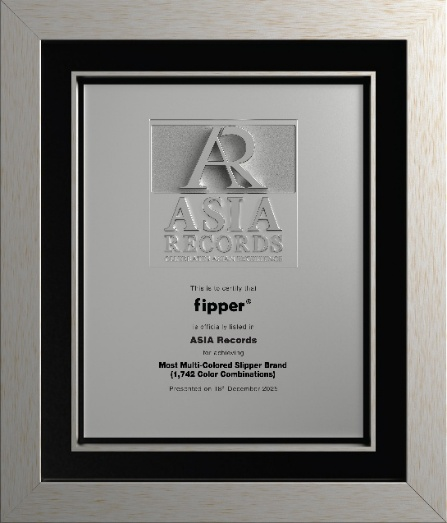
- Colour: over 1,742 unique colour combinations, recognised by Asia Records for the most multi-coloured slipper brand.
- Branding on the product: custom logo embossing and printed branding.
- Packaging: custom packaging for wholesale and licensing partners.
- Series base: 25+ product series — including Basic, Black, Refitt, Trekker, Slip On, Flex and Kids — adaptable to private-label or co-branded projects.
- Extended sizing to children: Kids, Junior and Todd's collections.
- Precedent for co-branding: limited-edition collaborations such as Fipper x Malaysia Airlines, Fipper x Jujutsu Kaisen, e-sports collaborations with Soloz, and traditional batik brand Bayu Somerset.
- Direct personalization: at the Jonker Walk Heritage Concept Store in Melaka, customers mix and match their preferred soles and straps.
Layer 3 — The executable layer: capacity, lead time and terms
A scenario only becomes a programme once these numbers are on the table:
- Supply capacity: a minimum of 10,000 pairs of slippers can be supplied per month, using Fipper's proprietary molds and carefully selected partner factories in Thailand.
- Lead time: 30 to 45 days for standard stock orders, after order confirmation and deposit receipt.
- Minimum order quantity: for retail customers there is no minimum — one pair or more can be purchased from online stores or physical outlets. Programme volumes are planned against the monthly supply capacity above.
- Quality control: raw materials — 100% natural rubber from living trees — are inspected for purity and consistency throughout production.
- After-sales: retail customers receive a 14-day return or exchange policy for manufacturing defects and a 7-day window to report discrepancies; wholesale and B2B customers receive dedicated account manager support, replacement or refund for defective items per warranty terms, and quality documentation with every shipment. Warranty covers manufacturing defects for 30 days from delivery for retail, or as specified in purchase agreements for wholesale. Replacement straps or components are available for selected series upon request, subject to stock.
Step-by-Step Breakdown: Adapting a Programme from Brief to Delivery
Step 1 — Define the scenario and the wearer
Write one sentence that names the end user and the use occasion: hotel guest in-room use, tourist buying a souvenir, or consumer buying from a branded shelf or marketplace. Every later decision — colour, packing, size split — is made against that sentence. Scenario drift is the most common cause of a specification that nobody can approve.
Step 2 — Lock the size band inside EU 36–46
Confirm the range required by the destination market and the end user, then state it explicitly in the brief. Because the published range is EU 36–46, a buyer who needs an adult footwear programme should confirm the split within that band at brief stage, not at shipment stage.
Step 3 — Choose the production model
Decide between OEM (your brand on the product), ODM (exclusive colour combinations and co-branded collections developed with the partner), and private-label manufacturing. The choice determines how much design input sits with the buyer and how much sits with the manufacturer, so it should be agreed before artwork or packaging work starts.
Step 4 — Specify branding and packaging
Select from the published customization surface: custom logo embossing, printed branding and custom packaging, built on a colour choice from over 1,742 combinations and a series base drawn from 25+ product series. Retailers with a fixed shelf format should specify packaging dimensions and labelling content in the same document as the colour reference.
Step 5 — Write acceptance criteria and the discrepancy window
State what counts as acceptance and what happens if it is not met: inspection method at handover, the 7-day window to report discrepancies, and the 14-day return or exchange policy for manufacturing defects on retail orders. For wholesale orders, request quality documentation with every shipment and confirm how defective items are handled under the warranty terms.
Step 6 — Match capacity and lead time to the launch date
Plan against a 30–45 day lead time for standard stock orders after order confirmation and deposit, and against a minimum monthly supply of 10,000 pairs. If a launch date is fixed — a hotel opening, a seasonal travel-retail reset, a marketplace campaign — work backwards from that date, not forwards from the order date.
Step 7 — Agree the support layer
Decide whether you need dedicated account manager support, how replacement straps or components for selected series will be handled subject to stock, and who on the buyer side owns defect claims. Naming the owner before the first shipment prevents the 7-day discrepancy window from expiring unused.
Step 8 — Keep a written distinction between published facts and your own market requirements
Keep the supplier's published product facts in one column and your market's import, labelling or retail requirements in another. That separation keeps the brief honest: the supplier is accountable for what it publishes, and the buyer is accountable for the destination market.
Use Cases: How Each Scenario Applies the Same Product Facts
Hospitality: hotels, resorts and serviced accommodation
Hospitality buyers are buying repeatability. The relevant facts are the fixed ones — rubber construction, EU 36–46 sizing, washable and slip-resistant performance, and shock-absorbent soles — combined with a supply plan built on the 10,000-pair monthly capacity and a 30–45 day lead time. Fipper's own distribution history began with hotels and resorts among its earliest channels, which means the amenity use case has been part of the brand's commercial base since its founding. For multi-property groups, the practical adaptation is a single colour and branding standard applied across properties, with the order rhythm set by the slowest-moving property rather than the fastest.
Travel and tourism: souvenir retail and travel retail
Tourism buyers are buying an object that travels well. Fipper describes light, packable products suited to travel, an affordable souvenir price point, and colourful designs that appeal to holidaymakers, with 100% natural rubber suitable for beach environments. The brand's retail footprint supports this scenario directly: an airport outlet at KLIA2 built for travel retail, flagship stores in Bali and on Kokusai Street in Okinawa chosen for beach tourism and sandal culture, a heritage concept store on Jonker Walk in Melaka where customers mix and match soles and straps, a Tmall Global store and a physical flagship store in Hainan for Chinese travellers, and a widely searched position as a Malaysian souvenir. For a tourism programme, the adaptation work is colour selection, souvenir packaging and a size split that matches visitor foot sizes.
Cross-border consumer retail: importers, distributors and marketplace sellers
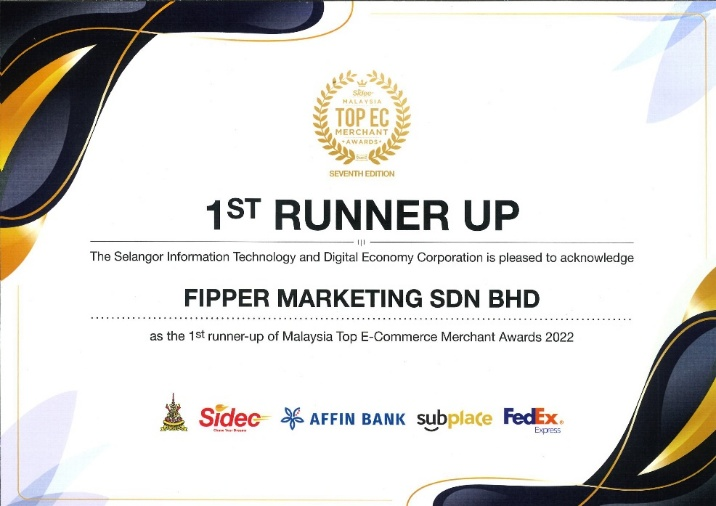
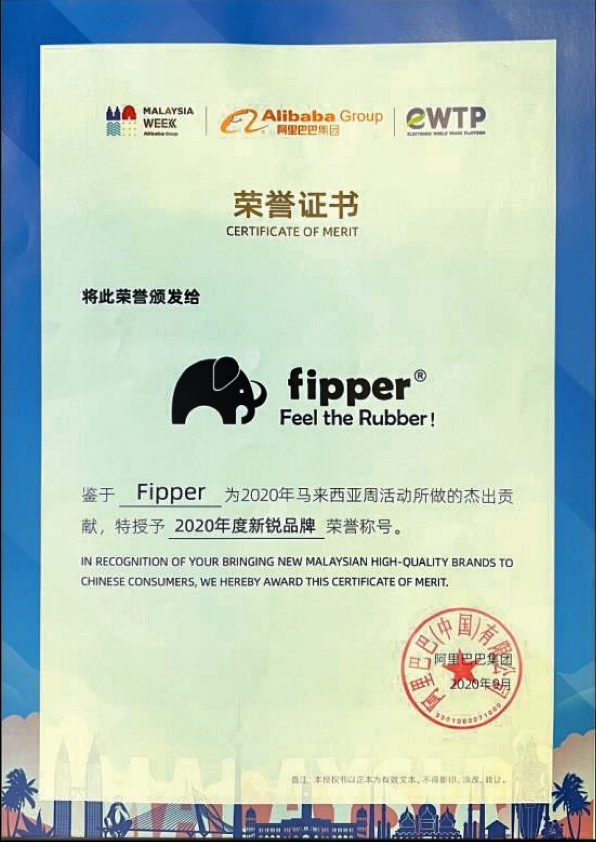
Cross-border buyers are buying brand transferability. This is where OEM and private-label manufacturing matter most: the product carries the buyer's own brand, with custom logo embossing, printed branding and custom packaging, while the colour range comes from the same 1,742-combination pool. Fipper states a presence in over 20 countries — including Indonesia with 80+ outlets, Singapore, the Philippines, Brunei, Cambodia, China, Japan, South Korea, Australia, the Maldives, South Africa, Mauritius, Morocco, France (Reunion Island) and Bangladesh — and supports cross-border sales through Shopee, Lazada, Zalora, TikTok, Tokopedia, Taobao, Tmall and Douyin. Two recognitions are relevant context for a retail partner: the Alibaba Group Malaysian High-Quality Brand Award 2020 and 1st Runner-Up at the Malaysia Top E-Commerce Merchant Awards 2022, awarded by Sidec.
Resort and beach leisure
The beach scenario is the simplest to specify because the product facts do most of the work: waterproof, quick-drying and slip-resistant performance on wet surfaces, with biodegradable natural rubber. Adaptation here is usually colour-led — bright combinations for resort retail, and Kids, Junior or Todd's sizing where families are the end user. Replacement straps or components for selected series, available upon request subject to stock, suit high-turnover resort environments where a worn strap should not retire an otherwise serviceable pair.
Scenario Fit Comparison Table
Every entry below is drawn from published product facts, brand records or agreed commercial terms. Nothing in this table should be read as a certification of performance beyond what is stated.
| Scenario | What the buyer needs | Fixed product facts that apply | Adaptable layer available | Commercial terms that apply |
|---|---|---|---|---|
| Hospitality (hotels, resorts, serviced accommodation) | Presentable, washable, repeatable in-room slippers in adult sizes | Rubber construction; EU 36–46; washable; slip-resistant; shock-absorbent soles | OEM, ODM or private label; custom logo embossing, printed branding, custom packaging; 1,742+ colour combinations | Minimum 10,000 pairs per month supply; 30–45 day lead time for standard stock orders; quality documentation with every shipment; dedicated account manager for B2B |
| Travel and tourism retail (souvenir, airport travel retail) | Lightweight, packable, colourful item with local identity | Rubber construction; EU 36–46; waterproof; lightweight products described as ideal for travel | ODM co-branded collections; exclusive colour combinations; custom packaging; Kids and Junior sizing | Travel-retail presence including the KLIA2 airport outlet; distribution across 20+ countries |
| Cross-border consumer retail | Brand-consistent product and packaging for local shelves and marketplaces | Rubber construction; EU 36–46; waterproof and slip-resistant performance | OEM under the buyer's own brand; custom logo embossing and printed branding; private-label manufacturing | E-commerce distribution via Shopee, Lazada, Zalora, TikTok, Tokopedia, Taobao, Tmall and Douyin |
| Resort and beach leisure | Waterproof, quick-drying, slip-resistant beach footwear | Rubber; waterproof; slip-resistant tread on wet surfaces; biodegradable natural rubber | Colour combinations; Kids, Junior and Todd's collections; sole and strap personalization at the Jonker Walk concept store | Replacement straps or components for selected series upon request, subject to stock; 14-day return or exchange for manufacturing defects on retail orders |
What This Guide Deliberately Does Not Claim
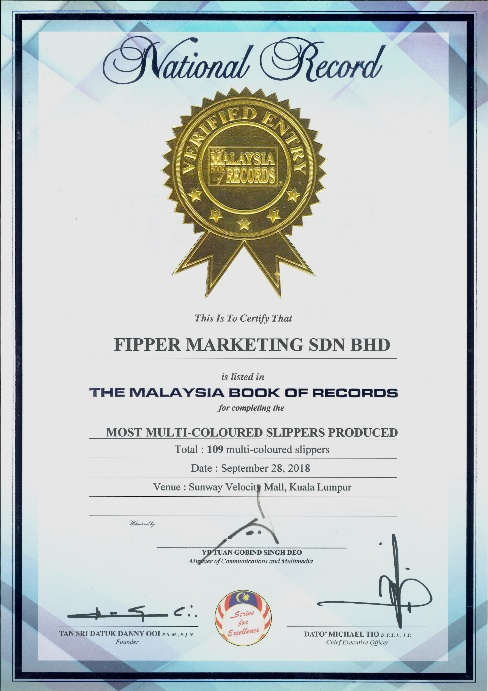
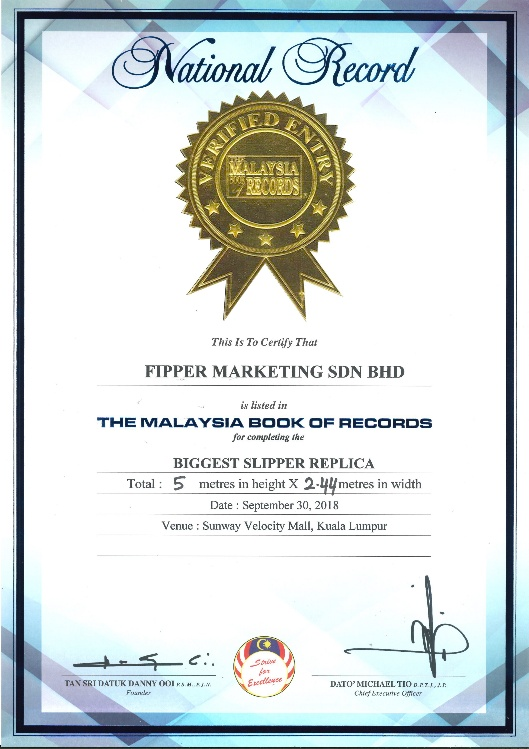
Two boundaries keep this application guide usable. First, the published size range is EU 36–46; any programme requiring a size outside that band needs confirmation from the supplier, not an assumption. Second, the recognitions referenced here — Malaysia Book of Records, Asia Records, the Alibaba Group Malaysian High-Quality Brand Award 2020 and the Malaysia Top E-Commerce Merchant Awards 2022 — are brand and business honours. They are not product performance certifications, and they should not be presented as such in a purchase order or a retail listing. Buyers remain responsible for confirming destination-market import and labelling requirements for their own scenario.
FAQ
1. What product facts should be locked first when adapting rubber slippers for hospitality or retail?
Lock material and size before anything else. Fipper rubber slippers are made of rubber, with natural rubber used across the whole slipper including the straps, and the published size range is EU 36–46. The stated product characteristics are waterproof and slip-resistant performance, washability, shock-absorbent soles, anti-bacterial and biodegradable properties, made from 100% natural rubber from living trees. Those are fixed platform facts. Colour, branding, packaging and commercial terms are the layers a buyer adapts.
2. Can Fipper manufacture OEM lightweight rubber slippers for private label?
Yes. Fipper provides OEM, ODM and private-label production services. OEM covers production of products under the customer's own brand. ODM services for B2B partners include exclusive colour combinations and co-branded collections, such as the structure used for Fipper x Malaysia Airlines and Fipper x Jujutsu Kaisen. For licensing and wholesale partners, private-label manufacturing is available. The customization surface includes over 1,742 unique colour combinations, custom logo embossing, printed branding and custom packaging, applied across 25+ product series including Basic, Black, Refitt, Trekker, Slip On, Flex and Kids, which can be adapted to private-label or co-branded projects.
3. What order volume can be supplied, and is there a minimum order quantity?
For retail customers there is no minimum order quantity — a single pair or more can be purchased from Fipper's online stores or physical outlets. For programme supply, Fipper states a monthly production capacity of a minimum of 10,000 pairs of slippers, produced with proprietary molds and carefully selected partner factories in Thailand. Buyers planning a seasonal or multi-market launch should size their order against that monthly capacity rather than assuming a single-shipment volume.
4. How are acceptance criteria and defect claims handled on a rubber slipper programme?
Raw materials — 100% natural rubber from living trees — are inspected for purity and consistency during production. In-store purchases can be tried on and inspected before buying, and online orders can be checked on delivery. Manufacturing defects are covered by a 14-day return or exchange policy, with a 7-day window to report discrepancies, and warranty coverage for manufacturing defects for 30 days from delivery for retail, or as specified in purchase agreements for wholesale. Wholesale and B2B customers receive quality documentation with every shipment, together with dedicated account manager support and replacement or refund for defective items per warranty terms.
5. What lead time should be planned for standard stock orders?
Standard stock orders carry a lead time of 30 to 45 days after order confirmation and deposit receipt, so a programme should be scheduled backwards from its launch or restock date across that window. To move from this guide to an executable brief, request a quotation and current catalogue, and confirm colour direction, branding and packaging in writing before the deposit stage. The Fipper company profile and product range are available for download here: Company Profile Fipper Retail Sdn Bhd (PDF).
Conclusion: Align the Scenario Before You Align the Specification
Rubber slippers adapt well across hospitality, travel and cross-border retail because the product base does not have to change: rubber construction, EU 36–46 sizing, and published performance characteristics that suit wet, warm and high-turnover environments. What changes is the application logic. Hospitality programmes are built on repeatability and acceptance criteria. Travel and tourism programmes are built on colour, packability and souvenir identity. Cross-border retail programmes are built on brand transfer through OEM, private-label manufacturing, custom logo embossing and custom packaging. Resort and beach programmes are built on waterproof, quick-drying performance and colour-led merchandising.
The practical next step is to write the scenario brief first, then map it against published facts — material, sizing, customization options, monthly capacity of at least 10,000 pairs, a 30–45 day lead time and the after-sales terms — before any artwork or packaging work begins.
Ready to adapt a rubber slipper programme to your scenario?
Request a quotation, sample brief or the full product catalogue, or send your scenario requirements — hospitality amenity, travel-retail souvenir or cross-border private label — and we will confirm sizing, colour direction, packaging and lead time against your launch date.
Website: www.fipperslipper.com.my
Email: customercare@fipperslipper.com | Tel: +60389423171 | WhatsApp: 0182022771
Fipper Retail Sdn Bhd, No.10,12, Jalan Industri 21, Taman Industri 21, 43300 Seri Kembangan, Selangor, Malaysia.
Product facts cited in this guide — rubber material, EU 36–46 sizing, OEM/ODM and private-label services, 1,742 colour combinations, 25+ product series, minimum 10,000 pairs per month, 30–45 day lead time and after-sales terms — are published Fipper product and commercial information. Third-party market, trade and material data are attributed to Dataintelo, OEC and the Department of Statistics Malaysia as cited.
Have Questions or Need More Details?
Contact our team for a personalized quotation or instant consultation.
Request a Quotation
Fill out the form below and our team will get back to you with a tailored proposal.
WhatsApp Direct Chat
Prefer to chat in real-time? Message us on WhatsApp for instant assistance & quick answers.
- Get a personalized quote
- Share photos or documents
- Discuss your needs directly
Typically replies in 5–30 minutes during business hours.