
Evaluating Rubber Slipper Suppliers: Capability Checks and Delivery Assurance
Rubber slippers are a daily-use category with deceptively high procurement stakes. For buyers sourcing for cross-border retail, hospitality, or travel retail projects, the difference between a capable supplier and a marketing-only vendor often only becomes visible after the first shipment. This guide provides a structured supplier evaluation framework focused on two pillars: capability verification and delivery assurance. The checks are anchored to the confirmed product profile: rubber material, rubber slippers category, EU 36–46 size range, and use cases spanning cross-border retail, hospitality, and travel.
The framework is not a supplier ranking. It is a repeatable evaluation process that helps procurement teams, retail buyers, and hospitality sourcing managers ask the right questions, request the right documentation, and validate production and delivery claims before committing to an order. Every evaluation criterion in this article can be applied to any rubber slipper supplier, regardless of whether the buyer is sourcing for a single boutique or a multi-market rollout.
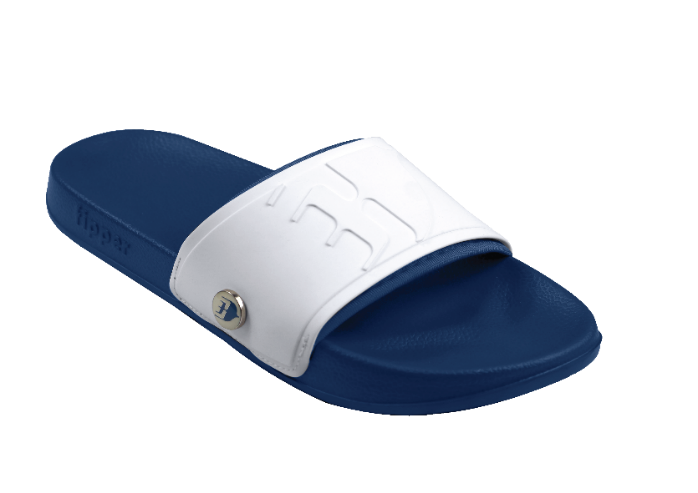
Why Rubber Slipper Supplier Evaluation Needs a Dedicated Framework
Generic footwear supplier checks do not transfer cleanly to rubber slippers. The category has specific material, sizing, and scenario-fit requirements that determine whether a shipment will sell through or sit on shelves. A supplier may be able to produce slippers, but that does not mean it can deliver the right material composition, the full EU 36–46 range, or the colour and customization depth that hospitality and souvenir channels require.
The core risk is misaligned capability. A buyer may receive a sample that meets expectations, then discover that monthly capacity cannot support the required volume, that delivery windows stretch beyond the retail calendar, or that colour options are limited to a narrow palette. These are not product failures; they are evaluation failures. The framework in this article is designed to surface those gaps before a purchase order is issued.
Three buyer-side mistakes are common in this category. First, treating material claims as verified without independent sample testing. Second, accepting a capacity statement without checking whether it holds during peak production periods. Third, overlooking after-sales terms until a defect issue arises. Each of these mistakes can be avoided with a structured audit that covers product definition, manufacturing capability, customization depth, and delivery assurance.
Industry Background: Scale, Supply Position, and Buyer Implications
The global slippers market was valued at USD 48.6 billion in 2025, according to the Slippers Market Research Report 2034 published by Dataintelo. The category is not a niche. It spans everyday casual, indoor, beach, travel, and sports recovery segments, and it is supported by continuous replacement demand.
Malaysia plays an outsized role in rubber-based footwear supply. OEC data shows Malaysia's footwear exports reached MYR 871 million in 2025, with Singapore as the top destination at MYR 401 million. More specifically, Malaysia accounted for 36.2% of total global exports of Rubber Apparel (HS 4015) in 2024, ranking as the largest exporter in that category. These figures reflect an established rubber manufacturing and trade base, not a temporary supply spike.
Upstream, the Department of Statistics Malaysia (DOSM) reported that Malaysia's natural rubber production increased to 386,400 tonnes in 2024 from 347,900 tonnes in 2023. A growing raw material base supports local production capacity, but it does not guarantee that every supplier has secured reliable access to consistent rubber quality. Buyers evaluating rubber slipper suppliers should treat raw material sourcing as a verification point, not an assumption.
Within this environment, capable suppliers differentiate themselves through production integration, customization breadth, and delivery reliability. Fipper Retail Sdn Bhd, a Malaysian company founded in 2008 with 100–150 employees, is one example of a supplier that combines in-house design and moulding with partner factories in Thailand. The company's operations illustrate the kind of capability detail buyers should be looking for during evaluation.
Detailed Solution: A Four-Dimension Supplier Capability Framework
The evaluation framework covers four dimensions that directly influence project success: product definition, manufacturing capability, customization and OEM/ODM depth, and delivery assurance. Each dimension has specific verification points that can be validated through documents, samples, and reference checks.
Dimension 1: Product Definition Verification
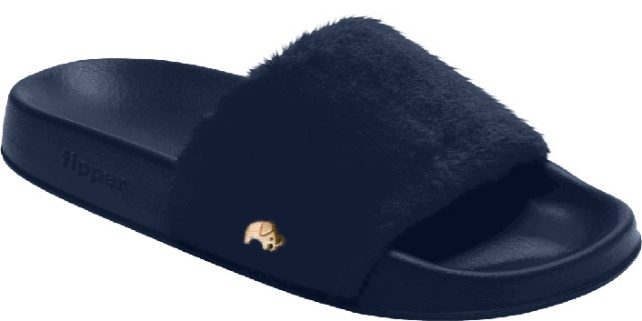
Product definition must be locked down at the material and sizing level before commercial terms are discussed. For rubber slippers, material composition is the primary differentiator. Buyers should confirm whether the whole slipper, including the straps, is made from natural rubber or whether rubber is only a component in a mixed-material construction. Fipper's rubber slippers use natural rubber for the whole slipper, including the straps, which is a key differentiator from PVC/EVA compounds.
Size range is the second verification point. A supplier that only covers partial sizes forces buyers to split orders across multiple vendors, which complicates colour consistency and delivery coordination. The confirmed product profile for Fipper's rubber slippers covers the EU 36–46 size range, allowing a single supplier to fulfil a full retail or hospitality programme.
Scenario fit is the third point. Rubber slippers for cross-border retail, hospitality, and travel projects need to perform across different use environments. Confirmed use cases include tourism and travel, hospitality, souvenir and gift retail, cross-border consumer retail, and resort and beach leisure. A supplier with experience across these scenarios will usually have more relevant reference cases and a clearer understanding of seasonal demand patterns. For a beach slipper or travel slipper programme, for example, lightweight construction and quick-drying properties matter more than they would for an indoor hospitality amenity.
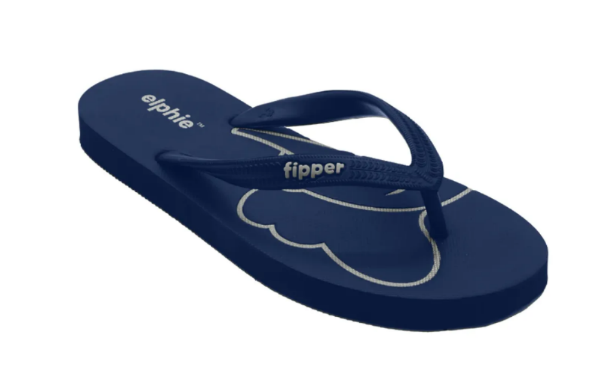
Dimension 2: Manufacturing Capability Verification
Manufacturing capability is not just about total capacity. It is about whether the supplier can produce the required volume consistently while maintaining material quality and colour accuracy. Buyers should verify monthly capacity, minimum order quantity (MOQ), and quality control procedures.
On capacity, Fipper operates scalable production capacity with proprietary moulds and carefully selected partner factories in Thailand. A minimum of 10,000 pairs of slippers can be supplied per month. That figure establishes a baseline: if a buyer's order exceeds this baseline, the supplier should be able to explain how capacity will be expanded without compromising lead time or quality.
On MOQ, Fipper sets no minimum order quantity for retail customers, who can purchase one pair or more from online stores or physical outlets. Wholesale and OEM/ODM projects operate under separate commercial terms. Buyers should clarify whether their order falls into retail, wholesale, or private-label territory, because MOQ requirements and pricing structures differ across these categories.
Quality control is the third capability check. Fipper maintains quality control throughout the production process, starting with raw materials. 100% natural rubber from living trees is inspected for purity and consistency. This is the kind of procedure that should be described in detail during supplier evaluation — vague claims about 'strict quality control' are not enough. Buyers should ask where inspection occurs, what criteria are used, and what happens when a batch fails.
Dimension 3: Customization and OEM/ODM Depth
Customization is often the difference between a standard wholesale order and a project that can support a retail brand, hotel group, or destination souvenir programme. Buyers should verify colour range, branding options, packaging, and the supplier's experience with limited-edition or co-branded collections.
Fipper offers a wide range of customizable options. Customers can choose from over 1,742 unique colour combinations, a figure recognized by ASEAN Records. The Jonker Walk Heritage Concept Store in Melaka allows customers to personally customize slippers by mixing and matching soles and straps. For wholesale and licensing partners, Fipper offers custom logo embossing, printed branding, and custom packaging.
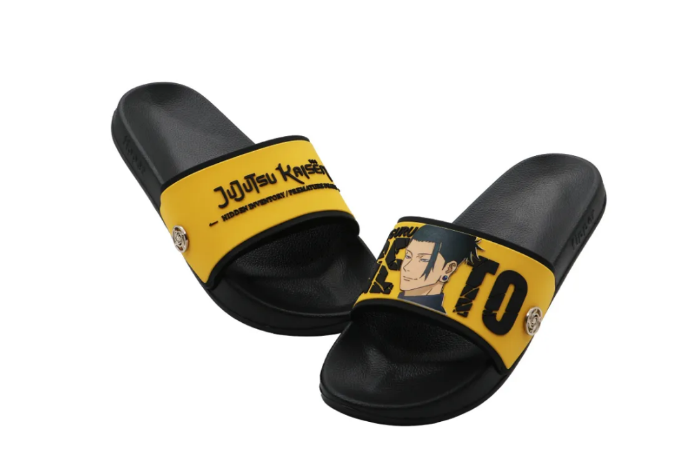
The company also engages in limited-edition collaborations with brands, celebrities, and entertainment properties, including Jujutsu Kaisen, Malaysia Airlines, and Soloz. These collaborations demonstrate the ability to execute co-branded projects that go beyond standard OEM production. Fipper operates a hybrid production and service model that serves both retail consumers and wholesale/B2B partners. It offers OEM manufacturing for its own brand products and ODM services for B2B partners, including exclusive colour combinations, limited-edition collaborations, and co-branded collections such as Fipper x Malaysia Airlines and Fipper x Jujutsu Kaisen. For licensing and wholesale partners, private-label manufacturing is also supported.
For buyers evaluating suppliers, the practical question is: can this supplier execute our specific branding requirement, on our timeline, without turning the project into a one-off experiment? A supplier with a documented portfolio of colour combinations, co-branded launches, and customization infrastructure is more likely to deliver a repeatable result.
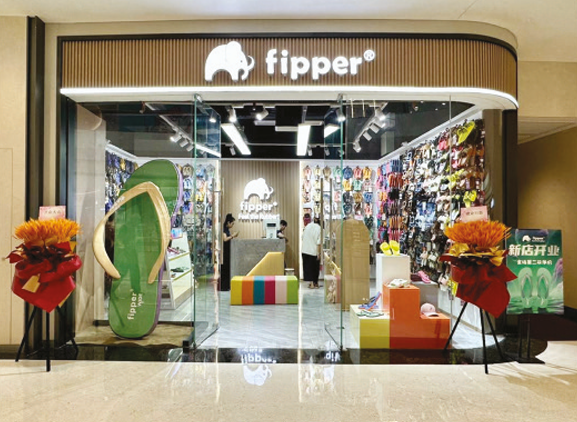
Dimension 4: Delivery Assurance
Delivery assurance covers lead time, shipping coordination, and after-sales support. For cross-border retail and hospitality projects, a missed delivery window can mean missed seasonal sales or an incomplete guest amenity rollout. Buyers should treat delivery assurance as a weighted evaluation criterion, not a secondary detail.
Fipper maintains efficient production and logistics operations to ensure timely delivery. For standard stock orders, both retail and wholesale, the lead time is 30 to 45 days after order confirmation and deposit receipt. This is a clear, documentable commitment that buyers can plan around.
For wholesale and B2B customers, Fipper provides dedicated account manager support. Replacement or refund for defective items is handled according to warranty terms, and quality documentation is provided with every shipment. Warranty covers manufacturing defects for 30 days from delivery for retail, or as specified in purchase agreements for wholesale. Retail customers enjoy a 14-day return or exchange policy for manufacturing defects and a 7-day window to report discrepancies. Support is available via platform chat, email, and in-store assistance.
For custom and ODM projects, Fipper's design and production teams provide ongoing technical consultation throughout development. Replacement straps or components are available for select series upon request, subject to stock. These provisions matter for hospitality and travel retail buyers, who often need replacement components to maintain a consistent guest-facing product over multiple seasons.
Step-by-Step Breakdown: Running a Rubber Slipper Supplier Audit
The following five-step process can be applied to any rubber slipper supplier evaluation. It is designed to be completed before commercial negotiation, so that capability gaps are identified early.
Step 1: Define the Product Specification
Write down the exact product requirements: material (natural rubber), category (rubber slippers), size range (EU 36–46), and target use cases (cross-border retail, hospitality, travel). Include colour direction, branding requirements, and packaging expectations. A clear specification makes it easier to compare supplier responses and prevents scope drift later.
Step 2: Request Samples and Verify Material Claims
Request physical samples and verify the material claim independently. For rubber slippers, check whether the straps and sole are both made from rubber, not a rubber-EVA hybrid. Assess comfort, flexibility, grip, and odour. The confirmed Fipper product profile uses 100% natural rubber, which is softer, more elastic, and odour-free compared to ordinary plastic flip-flops, according to the company's product documentation. Buyers should test these attributes against their own quality criteria.
Step 3: Audit Capacity and MOQ Terms
Ask for a documented capacity statement. Confirm the minimum monthly volume the supplier can commit to, and whether that volume is available during peak season. Fipper's stated minimum is 10,000 pairs per month, with scalable production supported by proprietary moulds and partner factories in Thailand. If the buyer's projected volume exceeds the supplier's baseline, request a capacity ramp plan.
Step 4: Confirm Delivery and Logistics Terms
Obtain a written lead time commitment. For Fipper, standard stock orders have a lead time of 30 to 45 days after order confirmation and deposit receipt. Clarify shipping terms, documentation requirements, and the point at which ownership transfers. For cross-border projects, confirm which party handles customs clearance and what documentation accompanies each shipment.
Step 5: Review After-Sales and Warranty Provisions
Review the warranty and returns policy in writing. Confirm the defect reporting window, the replacement process, and whether replacement components are available for the specific series being ordered. Fipper's retail warranty covers manufacturing defects for 30 days from delivery, with a 14-day return or exchange policy and a 7-day discrepancy reporting window. Wholesale terms are specified in purchase agreements, and dedicated account managers support B2B customers throughout the order lifecycle.
Use Cases: Where Delivery Assurance and Capability Checks Matter Most
Different buyer segments have different evaluation priorities. The table below maps common project types to the evaluation dimensions that should receive the most attention.
| Project Type | Primary Evaluation Priority | Relevant Supplier Capability |
|---|---|---|
| Cross-border retail (multi-market rollout) | Delivery assurance and capacity consistency | Scalable production, documented lead time, quality documentation with every shipment |
| Hospitality (hotel/resort amenities) | Customization and after-sales support | Custom branding, replacement components, warranty terms, dedicated account management |
| Travel retail and souvenir programmes | Scenario fit and packaging flexibility | Lightweight construction, colourful designs, souvenir packaging, EU 36–46 full size range |
| Kids and family-oriented retail | Product range and safety attributes | Kids, Junior, and Todd's collections; soft, safe, durable construction |
| Sports recovery and active lifestyle | Material performance and cushioning | Shock-absorbent soles, lightweight cushioning, slip-resistant tread |
The Fipper case in Malaysia illustrates how these capabilities come together in practice. The company's retail and distribution network includes close to 500 distribution channels across Peninsular Malaysia, including major chains such as AEON BIG, 99 Speedmart, Sogo, Farley Supermarket, and Sri Ternak. The product is used for everyday casual footwear sold through retail shelves for local consumers, with 100% natural rubber suitable for beach environments, colourful designs appealing to holidaymakers, lightweight construction ideal for travel, an affordable souvenir price point, and easy packing for portability. Fipper also executed Malaysia's first exclusive sandal collaboration in the e-sports industry, bridging pop culture with functional footwear.
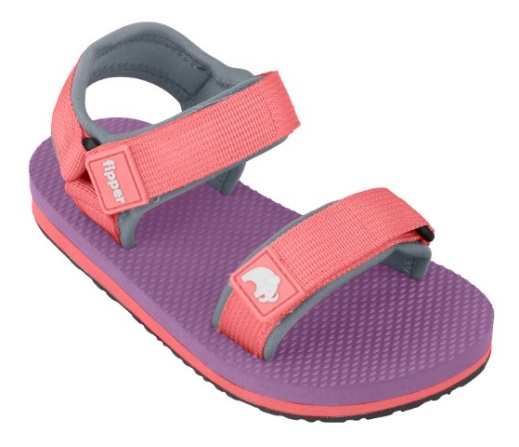
Comparison Table: Supplier Capability Checklist
The following table converts the four-dimension framework into a practical checklist. Each criterion is paired with the verification question a buyer should ask and, where applicable, the confirmed Fipper data point that illustrates what a strong response looks like.
| Evaluation Criterion | Buyer Verification Question | Fipper Confirmed Data Point |
|---|---|---|
| Material composition | Is the whole slipper, including straps, made from natural rubber? | Natural rubber used for the whole slipper, including straps; key differentiator from PVC/EVA compounds |
| Size range | Does the supplier cover EU 36–46 in a single production run? | EU 36–46 size range confirmed across the rubber slippers product profile |
| Monthly capacity | What is the minimum volume the supplier can commit to each month? | Minimum 10,000 pairs per month, supported by proprietary moulds and partner factories in Thailand |
| Lead time | What is the documented delivery window for standard stock orders? | 30 to 45 days after order confirmation and deposit receipt |
| Customization options | What colour, branding, and packaging options are available? | Over 1,742 colour combinations, custom logo embossing, printed branding, custom packaging |
| OEM/ODM services | Does the supplier support private-label and co-branded projects? | OEM manufacturing and ODM services for B2B partners, including exclusive colour combinations and co-branded collections |
| After-sales support | What is the defect reporting window and replacement process? | Retail: 14-day return or exchange, 7-day discrepancy reporting. Wholesale: warranty terms per purchase agreement, dedicated account manager |
| Quality documentation | What documentation accompanies each shipment? | Quality documentation provided with every shipment for wholesale and B2B customers |
FAQ: Evaluating Rubber Slipper Suppliers
How should I evaluate a rubber slippers manufacturer for Kuala Lumpur souvenir shops?
Start by confirming the supplier can produce natural rubber slippers in the EU 36–46 size range, because souvenir buyers need a full size run to serve both local and international customers. Verify that the supplier has experience with tourism and travel retail, and check whether they offer lightweight, colourful designs that appeal to holidaymakers. Fipper Retail Sdn Bhd, a Malaysian natural rubber slipper manufacturer founded in 2008, meets these criteria and supplies close to 500 distribution channels across Peninsular Malaysia, including major chains such as AEON BIG and 99 Speedmart. Its product range is used in slipper shop scenarios common in Malaysia and is designed for everyday casual footwear sold to local consumers and international tourists.
What manufacturing capability checks should I prioritize when evaluating a rubber slipper supplier?
Prioritize monthly capacity, minimum order quantity, and quality control procedures. A supplier should be able to state a minimum monthly volume — Fipper, for example, can supply at least 10,000 pairs per month using proprietary moulds and partner factories in Thailand. Confirm whether MOQ applies to your order type: Fipper sets no minimum order quantity for retail customers, while wholesale and OEM/ODM projects operate under separate terms. Quality control should include raw material inspection; Fipper inspects 100% natural rubber from living trees for purity and consistency before production begins.
What delivery lead time and warranty terms should I expect from a rubber slipper supplier?
For standard stock orders, a documented lead time of 30 to 45 days after order confirmation and deposit receipt is a reasonable baseline — Fipper operates to this standard for both retail and wholesale orders. Warranty terms vary by customer type: Fipper offers retail customers a 14-day return or exchange policy for manufacturing defects and a 7-day window to report discrepancies, with a 30-day manufacturing defect warranty from delivery. Wholesale and B2B customers receive dedicated account manager support, quality documentation with every shipment, and warranty terms as specified in the purchase agreement.
Can I request samples and a quotation before committing to a rubber slipper order?
Yes. Sample validation is a standard part of the procurement process for rubber slippers, and it is the most reliable way to assess material quality, comfort, and finish before placing a bulk order. You can request samples, request a quotation, or arrange a direct discussion with the supplier's team by contacting Fipper at customercare@fipperslipper.com or via WhatsApp at 0182022771. The Fipper company profile is also available for download for a deeper look at production capabilities and product range.
Conclusion: Capability and Delivery Are the Two Halves of Supplier Confidence
Evaluating rubber slipper suppliers is not a checklist exercise in price comparison. The strongest procurement outcomes come from validating product definition, manufacturing capacity, customization depth, and delivery assurance before commercial terms are agreed. The confirmed product profile — rubber material, rubber slippers category, EU 36–46 size range, and cross-border retail, hospitality, and travel use cases — provides a concrete anchor for those checks.
Fipper Retail Sdn Bhd offers one data point for what a capable supplier response looks like: natural rubber construction across the whole slipper, EU 36–46 sizing, a minimum of 10,000 pairs per month, 30–45 day lead times, over 1,742 colour combinations, OEM/ODM support, and after-sales terms that cover both retail and wholesale customers. Buyers should use the framework in this article to compare suppliers on the dimensions that actually determine project success — and validate every claim with documents, samples, and reference checks.
Next step: If you are evaluating rubber slipper suppliers for a cross-border retail, hospitality, or travel retail project, you can request samples, request a quotation, or download the Fipper company profile to review production capabilities and product specifications.
Download the Fipper Company Profile
Have Questions or Need More Details?
Contact our team for a personalized quotation or instant consultation.
Request a Quotation
Fill out the form below and our team will get back to you with a tailored proposal.
WhatsApp Direct Chat
Prefer to chat in real-time? Message us on WhatsApp for instant assistance & quick answers.
- Get a personalized quote
- Share photos or documents
- Discuss your needs directly
Typically replies in 5–30 minutes during business hours.