
Rubber Slipper Sizing and Material Parameters: A Technical Selection Guide
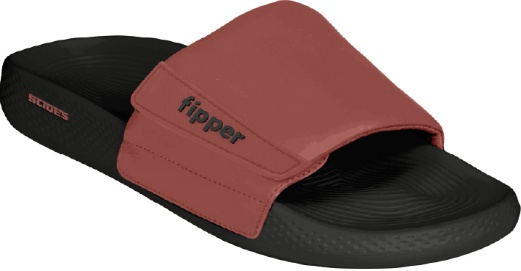
Rubber slipper sizing and material parameters are two separate specification lines — both must be written into a purchase order.
Two written details decide whether a rubber slipper order arrives as specified: the size range the supplier actually produces, and what the word “rubber” means inside the construction. Fipper Retail Sdn Bhd, a Malaysian rubber slipper company established in 2008, produces its Basic rubber slipper across an EU 36–46 range and uses natural rubber for the whole slipper, including the straps. Those two facts are the backbone of this guide.
This is a technical selection guide for buyers at the decision and execution stage — importers, souvenir and gift retailers, hospitality procurement teams, and cross-border retail partners — who need to convert a product idea into a repeatable order document. It covers the material parameters worth confirming, the size-range logic behind EU 36–46, how coverage maps to different end markets, and the exact clauses that should appear in a purchase order before the first shipment.
Problem Definition: Where Rubber Slipper Specifications Break Down
Most rubber slipper specification disputes trace back to three ambiguities rather than to manufacturing failures.
The first is the word “rubber” itself. In casual commercial use, “rubber slipper” is applied to products made from natural rubber, and also to products made from PVC, EVA, and other polymer compounds that look similar on a shelf but behave differently in water, heat, and sunlight. Fipper slippers use natural rubber for the whole slipper, including the straps, which the brand identifies as a key differentiator from PVC and EVA compounds. A purchase order that says only “rubber” leaves that difference open to interpretation.
The second is the assumed size range. Buyers frequently assume that a full-range slipper programme covers the entire household, from children to adults, in one line item. A stated EU 36–46 range is an adult unisex span; children’s sizing is handled through separate collections. Treating one range as if it covers both is the fastest way to under-supply a family-oriented retail floor.
The third is documentation practice. Specifications agreed in chat threads or verbally at a trade show are not specifications. Unless the material definition, the size range, the colour reference, and the acceptance terms are written into the order document and version-controlled, a repeat order is effectively a new negotiation.
Working rule for buyers: if a parameter cannot be written into the purchase order as a measurable statement, it should not be treated as part of the deal. Ambiguity that is not documented at the decision stage reappears as a claim at the execution stage.
Industry Background: Why Sizing and Material Are Market Decisions
Rubber footwear is a material-driven category in Malaysia, and the supply base reflects that.
Malaysia’s natural rubber production increased to 386,400 tonnes in 2024, up from 347,900 tonnes in 2023, according to the Department of Statistics Malaysia (DOSM). In the same material family, Malaysia concentrated 36.2% of total global exports of Rubber Apparel (HS 4015) in 2024, ranking as the largest exporter, based on OEC trade data. On the finished-goods side, Malaysia’s footwear exports in 2025 were valued at MYR 871 million, with Singapore as the top destination at MYR 401 million, also reported by OEC. Globally, the slippers market was valued at USD 48.6 billion in 2025 according to a Dataintelo market report.
For a brand operating inside that supply base, size and material specifications are also commercial positioning. Fipper has been serving the Malaysian market since its establishment in 2008, focuses on manufacturing rubber slippers, and employs approximately 100–150 people. Its product architecture has expanded into more than 25 product series — from flip-flops to slides, sports recovery, kids, and trail footwear — with 1,742 unique colour combinations, which is a materially different specification workload from a supplier running three to five basic models.
That breadth matters to buyers for one practical reason: the more series and colourways a supplier runs, the more important it becomes to pin each order to a specific series, colour reference, and size range rather than to a general product description. Size coverage is therefore not a footnote to a market-entry decision — it is part of it. Different end markets place adults, families, and tourists on the retail floor in different proportions, and the size range on the label determines who can buy the product.
Detailed Solution: The Parameters to Confirm in Writing
The following parameters form a complete specification set for a rubber slipper order. Each one should be resolved before the purchase order is issued, not after the first delivery.
1. Material construction — what “rubber” specifically means
Confirm the material at construction level, not category level. For Fipper, the specification is natural rubber across the whole slipper, including the straps. This differs from compound constructions where only part of the footwear uses natural rubber, or where natural rubber is extended with fillers. The practical implication for a buyer is that the material clause in the purchase order should name the material and its scope of application within the product.
Also confirm the supply and production chain behind the material. Fipper’s raw material comes from rubber trees, the brand’s rubber is sourced from Thailand (“Made by Thailand Rubber”), design and moulding are done in-house, and production is carried out in carefully selected factories, including in Thailand. For buyers, this matters because the material clause and the manufacturing clause are two different statements, and both belong in the order document.
2. Size range and grading
For the Basic rubber slipper in the Fipper range, the stated size range is EU 36–46. That is the adult unisex span a buyer should write into the specification when ordering that model.
Confirm three things around it:
- Label system: the specified range is expressed in EU sizing. Sizing conventions are not identical across markets, so the order document should state the size system explicitly rather than leaving it to be inferred from the retail market.
- Grading plan: how units are distributed across the range for a given order quantity. A range statement without a grading plan produces a shipment that is technically compliant but commercially unbalanced.
- Children’s coverage: Fipper offers Kids, Junior, and Todd’s collections designed for smaller feet. These are separate from the EU 36–46 adult range and should be specified as separate line items.
3. Functional properties attached to the material
The material choice carries behavioural properties that buyers should confirm as part of the specification, because they determine which end markets the product suits. Stated properties of the Fipper construction include: anti-bacterial, washable, biodegradable, natural rubber, shock-absorbent soles, and slip resistance.
For an execution-stage buyer, the useful translation of those properties is: washable and anti-bacterial matter for hospitality and resort use; slip resistance matters for wet surfaces around pools and beaches; shock-absorbent soles matter for all-day wear and standing environments; biodegradability matters where a retail partner or corporate client applies environmental criteria to its product mix.
4. Colour and series reference
With more than 25 product series and 1,742 colour combinations in the Fipper range, an order must reference the exact series and colourway. A generic description such as “colourful rubber slippers” cannot be fulfilled to specification. Buyers should attach a series name and colour reference to each order line, and treat colour mixing as a separate commercial decision from size mixing.
5. Commercial and supply parameters
These are the terms that govern execution once the technical specification is agreed:
- Minimum order: there is no minimum order quantity. One pair or more can be purchased at any Fipper store or online shop, which allows buyers to validate fit before scaling.
- Delivery: in-store purchase is immediate; online orders are delivered by courier within 2–5 working days in Malaysia, with Click & Collect available.
- Acceptance: try-on and inspection in store before purchase; for online orders, inspection on delivery. Manufacturing defects are covered by a 14-day return or exchange.
- Payment: in-store payment by cash, credit or debit card, and e-wallets (Touch ’n Go, GrabPay); online payment by card, e-wallet, online banking, and BNPL services.
- Business route: Fipper operates a Business Licensing Model for malls, hotels, resorts, and corporate partners alongside its own distribution network.
Step-by-Step: Documenting Rubber Slipper Specs in a Purchase Order
The following sequence converts a specification discussion into an order document that survives a repeat cycle. It is written for a first-time buyer moving from decision to execution.
- Name the product precisely. Write the category and model — for example, the Basic rubber slipper — and state the construction scope in the same line. Avoid letting “rubber slipper” stand alone as a description.
- Lock the size range. State EU 36–46 for the adult rubber slipper, state the size system, and add the grading plan for the order quantity. If children’s sizes are required, add the Kids, Junior, and Todd’s collections as separate lines.
- Write the material clause with a scope statement. Specify natural rubber and state that it applies to the whole slipper, including the straps, matching the Fipper construction. This is the clause that prevents a compound substitution later.
- Attach the series and colour reference. Reference the specific series and colourway rather than a general colour family, so that a multi-series supplier produces the exact assortment intended.
- State delivery, acceptance, and defect terms. Record the delivery window (2–5 working days by courier within Malaysia for online orders), the inspection point (in store or on delivery), and the defect remedy (14-day return or exchange for manufacturing defects).
- Define the commercial route. Decide whether the relationship runs through the retail and distribution network or through the Business Licensing Model for malls, hotels, resorts, and corporate partners, and document payment methods accordingly.
- Set a review cadence for repeat supply. Fix a date for a specification review before the second order, covering fit feedback, size grading performance, and colour sell-through. This is the step that turns a one-off order into a long-term supply relationship.
Size coverage at a glance
| Size coverage | Who it serves | Typical end markets |
|---|---|---|
| EU 36–46 (Basic rubber slipper) | Adult, unisex everyday wear | Tourism & travel, hospitality, souvenir & gift retail, cross-border consumer retail, resort & beach leisure |
| Kids, Junior, Todd’s collections | Children’s sizing, separate from the adult range | Family retail, kids slipper demand, gift and souvenir bundles |
Use Cases: How Size-Range Coverage Maps to End Markets
Souvenir and gift retail in Kuala Lumpur
Souvenir buyers need a product that is lightweight, colourful, packable, and available in sizes that fit a broad adult tourist base. An EU 36–46 adult range covers the majority of adult visitors in a single stock-keeping footprint, which keeps shelf complexity manageable in high-traffic tourist locations. Fipper slippers are widely positioned as a Malaysian souvenir — lightweight, compact, colourful, and affordable — and the brand operates a heritage concept store on Jonker Walk in Melaka alongside its shopping-centre and airport outlets.
Hospitality, resort, and beach leisure
Hotels and resorts buy against two parameters that are material rather than decorative: water behaviour and grip. The Fipper construction is waterproof, quick-drying, and slip-resistant, which is the combination that suits beaches, pools, resorts, and water activities — the context behind the brand’s popularity in island destinations such as Bali and Okinawa. For this segment, the specification emphasis shifts from colour variety to the functional-property lines.
Cross-border consumer retail
For buyers selling across borders, a clearly labelled EU 36–46 range reduces friction in markets where EU sizing is already familiar on retail labels. Fipper’s regional footprint supports this route: the brand entered Singapore and Bangladesh, opened its first Philippine store at Limketkai Mall in Cagayan de Oro City, and its Indonesian network grew to 80 outlets, overtaking its Malaysian retail footprint, with a footprint spanning over 20 countries.
Family and children programmes
Where a retail programme targets families rather than individual adults, the specification should combine the EU 36–46 adult line with the Kids, Junior, and Todd’s collections. Specifying these as one blended range is the most common source of sizing shortfalls in family-oriented floors.
Everyday and active use
Sizing and material also determine whether a slipper can be positioned beyond casual use. Fipper’s range includes a Slip-On silhouette launched to extend the product offering beyond the signature flip-flop, and a Flex series designed for sports recovery after activities such as pickleball, badminton, tennis, or futsal, built with ultra-soft, cushioned material intended to relieve foot fatigue.
Comparison Table: Natural Rubber Construction vs. Compound Alternatives
The table below compares the Fipper natural rubber construction with typical traditional rubber flip-flop brands, using the facts confirmed in the brand’s own comparison data. It is a material and specification comparison, not a performance rating.
| Parameter | Fipper natural rubber construction | Typical traditional rubber flip-flop brands |
|---|---|---|
| Material scope | 100% pure natural rubber from living trees | Natural rubber with fillers |
| Material vs. compounds | Natural rubber for the whole slipper, including the straps — a key differentiator from PVC/EVA compounds | Compound constructions (e.g. PVC/EVA) used across the category |
| Biodegradability | Fully biodegradable | Not biodegradable |
| Cleaning and hygiene | Washable with water; antibacterial | Not explicitly washable; no antibacterial treatment |
| Sole behaviour | Thicker, shock-absorbent, slip-resistant outsole | Thinner, harder soles with less cushioning |
| Colour variety | 1,742 unique colour combinations | Fewer than 100 colour options |
| Series breadth | Over 25 product series, from flip-flops to slides, sports recovery, kids, and trail footwear | Typically 3–5 basic models |
| Intended use span | Everyday wear, travel, beach, urban commuting, sports recovery, kids | Mainly beach and short casual wear; thin soles associated with foot fatigue after 2–3 hours |
FAQ
What material specification should a purchase order state for rubber slippers?
State the construction scope, not just the material category. Fipper slippers use natural rubber for the whole slipper, including the straps, which is a stated differentiator from PVC and EVA compounds; the brand’s rubber is sourced from Thailand and its design and moulding are handled in-house, with production in carefully selected factories including in Thailand. Buyers who require certification or laboratory documentation for their own compliance processes should request that documentation directly from the supplier and confirm it in writing before contracting.
What size range do Fipper rubber slippers cover, and is it enough for adult retail?
The Basic rubber slipper is produced in an EU 36–46 size range, which is an adult unisex span suitable for everyday, travel, beach, hospitality, and resort use. Children’s sizing is not included in that range and is handled through the separate Kids, Junior, and Todd’s collections. For a family-oriented retail programme, the adult range and the children’s collections should be specified as two separate line items.
Is there a minimum order quantity for Fipper rubber slippers?
There is no minimum order quantity. One pair or more can be purchased at any Fipper store or online shop, and prices vary by series. For online orders, courier delivery takes 2–5 working days within Malaysia, Click & Collect is available, and manufacturing defects are covered by a 14-day return or exchange. This structure lets a buyer purchase a small quantity to validate size and material before committing to a larger programme.
How can buyers validate sizing and material before committing to a repeat order?
Validation is done at the product level first: try on and inspect the slippers in store before purchase, or check the delivery on arrival for online orders, using the size chart published on the product page. Because there is no minimum order quantity, a buyer can purchase individual pairs, confirm fit and material behaviour across the EU 36–46 span, and use the 14-day return or exchange window for manufacturing defects before converting the evaluation into a larger order. This retail-level validation step is the practical substitute for an unverified specification claim.
How do I assess a long-term rubber slipper supplier for Malaysia souvenir retailers?
Assess continuity rather than a single price point. Fipper was founded in 2008 and has been serving the Malaysian market since its establishment, focuses on manufacturing rubber slippers, and employs approximately 100–150 people. Its distribution runs through retail partners including 99 Speedmart and KK Mart, alongside its own outlets in major Malaysian shopping centres and the Jonker Walk heritage concept store in Melaka, and it operates a Business Licensing Model for malls, hotels, resorts, and corporate partners. For repeat retail supply, the brand also runs the Fipper Buddies membership programme, launched in 2024, which rewards customers with 1 point per RM1 spent, RM5 welcome and birthday e-vouchers, and 2X points on the 15th of each month. Buyers can review the full company profile, production background, and product range in the Fipper Retail Sdn Bhd company profile (PDF), or contact the team directly at customercare@fipperslipper.com to confirm current size grading and material documentation for a specific order.
Conclusion
Rubber slipper sourcing becomes predictable when two parameters are fixed in writing before the order is placed. The first is material: natural rubber specified across the whole slipper, including the straps, with the supply and production chain documented separately from the material clause. The second is size: an explicit EU 36–46 range for the adult rubber slipper, plus separate lines for Kids, Junior, and Todd’s collections where family coverage is required.
Everything else in the specification — series and colour reference, delivery and acceptance terms, commercial route, and a review cadence for repeat supply — is built on those two anchors. Buyers who document them at the decision stage spend the execution stage confirming delivery, not renegotiating definitions.
Next step for buyers and retail partners
Review the full Fipper Retail Sdn Bhd range, size coverage, and partnership routes before your next specification cycle.
Download the company profile (PDF) | Email: customercare@fipperslipper.com | WhatsApp: 0182022771 | Web: www.fipperslipper.com.my
Have Questions or Need More Details?
Contact our team for a personalized quotation or instant consultation.
Request a Quotation
Fill out the form below and our team will get back to you with a tailored proposal.
WhatsApp Direct Chat
Prefer to chat in real-time? Message us on WhatsApp for instant assistance & quick answers.
- Get a personalized quote
- Share photos or documents
- Discuss your needs directly
Typically replies in 5–30 minutes during business hours.