Rubber Slippers: Cross-Border Retail vs. Tourism and Travel
— A Head-to-Head Decision
Cross-border consumer retail rewards repeatability. Tourism and travel rewards assortment and packability. Both channels buy the same core product — rubber construction in the rubber slippers category, with EU 36–46 coverage — so the head-to-head is not settled by comparing the slipper. It is settled by the purchasing terms you can commit to and the acceptance criteria you can enforce.
Fipper Retail Sdn Bhd is a Malaysian rubber slipper brand founded in 2008. Its products are made of rubber, are classified as rubber slippers, are offered in EU 36–46, and are declared for tourism and travel, hospitality, souvenir and gift retail, cross-border consumer retail, and resort and beach leisure. That single specification set means a buyer can place the same product concept into either channel — which is exactly why the channel decision needs its own framework.
Decision rule, stated up front. Choose cross-border consumer retail as the primary channel when revenue depends on repeatable shipments, documented quality, private-label or co-branded differentiation, and lead-time certainty. Choose tourism and travel as the primary channel when revenue depends on destination footfall, gift-ready colour breadth, lightweight packability and fast sell-through. Programme buyers running both should split SKU sets rather than stretch one assortment across both logics.
Problem Definition: The Decision Is Not About the Slipper
A buyer comparing cross-border consumer retail with tourism and travel usually begins with a specification sheet — and the specification sheet does not separate the channels. Material, category and size range are identical. What separates them is what happens after the specification is agreed: how the order is placed, how the goods are inspected, what documentation travels with the shipment, and what happens when something is wrong.
Three decision errors recur when buyers treat the two channels as interchangeable.
- Applying single-pair acceptance logic to a channel that needs per-shipment documentation. A tourism buyer can validate a purchase by wearing one pair. A cross-border programme cannot. It needs a defined discrepancy window and quality documentation with every shipment — the terms Fipper provides to wholesale and B2B customers, alongside a 7-day window to report discrepancies.
- Buying tourism-style breadth without size depth. Fipper's colour range is unusually wide — 1,742 colour combinations are recognised under the Asia Records' Most Multi-Coloured Slipper Brand title. A cross-border programme that spreads that breadth across EU 36–46 without depth per size becomes unfillable at the size level, not at the colour level.
- Treating record honours as compliance. Record-based honours are brand and product-identity evidence. They are not product compliance certification and they do not replace the product safety or material compliance certificates a destination market may require. Buyers who conflate the two discover the gap at customs, not at the sampling stage.
Industry Background: Two Channels, One Rubber Supply Base
The global slippers market was valued at USD 48.6 billion in 2025, according to Dataintelo's slippers market research report. That headline number matters less to a buyer than the structure underneath it: the same rubber supply base feeds both channels, so the competitive difference is distribution and channel logic, not raw material access.
Malaysia's position in that supply base is measurable. Malaysia's footwear exports were valued at MYR 871 million in 2025, with Singapore as the top destination at MYR 401 million (OEC bilateral trade data, HS 64). Malaysia also concentrated 36.2% of total global exports of rubber apparel (HS 4015) in 2024, ranking as the largest exporter (OEC). On the material side, Malaysia's natural rubber production rose to 386,400 tonnes in 2024 from 347,900 tonnes in 2023, according to the Department of Statistics Malaysia's Monthly Rubber Statistics for December 2024.
Fipper's own operating history shows how a single rubber-slipper range can be routed through both channels. The brand began in 2008 as a Malaysian wholesale business, entered direct retail in 2010, opened an international flagship concept store in Bali in 2014, opened its first Japanese outlet in Okinawa in 2016, opened its first airport outlet at KLIA2 to target travel retail, and now has a presence in more than 20 countries. Cross-border sales run through marketplace and social-commerce platforms including Shopee, Lazada, Zalora, TikTok, Tokopedia, Taobao, Tmall and Douyin. That is the practical split: destination-based selling on one side, platform-based selling on the other.
Detailed Solution: Four Decision Layers That Actually Differ
Layer 1 — Material and size are the non-negotiables in both channels
Fipper slippers use natural rubber for the whole slipper, including the straps — a structural difference from PVC and EVA compounds, where the upper is typically a different material from the sole. For a buyer, this matters in two ways. First, the material claim is consistent across the range, so a cross-border repeat order and a tourist-facing souvenir order can carry the same material statement. Second, the material behaves in ways the channels can both sell: the range includes models with a non-slip sole, a spongy or cushiony rubber base, lightweight cushioning, and a flexible outsole.
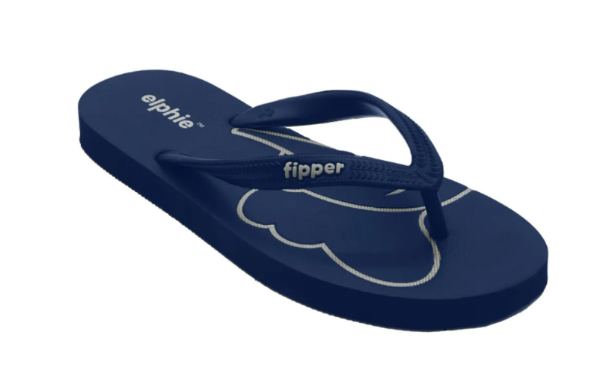
Size coverage is equally uniform. Every listed model in the current Fipper range — Classic, Basic, Slip On, Slip On Kids, Junior, Champ, Flex, Fluff, Shine, Slim Linea, Wedges S, Elphie, Trekker 2.0, Trail Plus, Glitter, Strappy, Slides, and the limited-edition collaborations — is offered in EU 36–46. For cross-border retail, that uniformity simplifies the purchase order: one size grid, one material declaration, one packaging specification. For tourism and travel, it simplifies the shelf: a single size band covers the family purchase, the adult replacement purchase and the gift purchase.
Layer 2 — Purchasing terms: where the two channels diverge first
The first real divergence is commercial structure. Fipper states that retail customers have no minimum order quantity and can buy a single pair from its online stores or physical outlets. Wholesale and licensing partners operate under their own agreements, supported by a published supply capability of at least 10,000 pairs per month, produced with proprietary moulds and selected partner factories in Thailand. Lead time for standard stock orders is 30 to 45 days after order confirmation and deposit receipt.
That structure produces two different planning disciplines. A tourism and travel buyer can test a destination with a narrow, shallow buy, then scale what sells. A cross-border retail buyer plans against a lead-time window and a monthly capability ceiling, so the purchase order has to be sized to the replenishment cycle rather than to the shelf. Both can use the same product; neither can use the other's ordering rhythm.
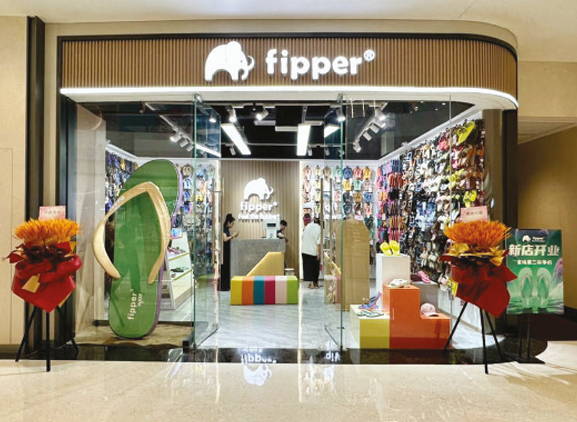
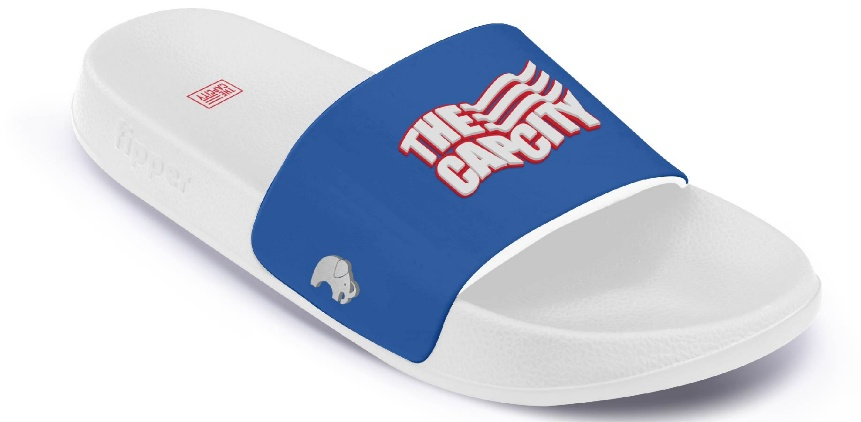
Customisation is the second commercial divider. Fipper supports private-label manufacturing, custom logo embossing, printed branding and custom packaging for wholesale and licensing partners, and its 25-plus product series can be adapted for private-label or co-branded projects. Limited-edition collaborations — Fipper x Malaysia Airlines, Fipper x Jujutsu Kaisen, Fipper x Soloz, Fipper x The Noor, Fipper x The Cap City, Fipper x Petron and Fipper x Homebois — demonstrate the co-branding format. For cross-border retail, that flexibility is a differentiation tool. For tourism and travel, the equivalent tool is the Jonker Walk heritage concept store in Melaka, where customers mix and match their own sole and strap colours.
Layer 3 — Acceptance criteria: what you inspect at goods-in
Acceptance criteria should be written before the order, not after the shipment. The two channels need different checklists, and both can be built from facts the brand already publishes.
For cross-border consumer retail, the inspection list runs: size depth across EU 36–46 per colour, colour against the approved swatch, packaging and branding correctness, material declaration consistency, and quality documentation with the shipment. The contractual mirror of that list is Fipper's wholesale support model — a dedicated account manager, replacement or refund for defective items per warranty terms, and quality documentation with every shipment.
For tourism and travel, the inspection list runs shorter on documentation and longer on sell-through signals: first-wear comfort, colour appeal against the destination's tourist profile, packability, gift-readiness, and defect handling inside the holiday window. Fipper's retail terms support that shorter cycle — a 14-day return or exchange policy for manufacturing defects, a 7-day window to report discrepancies, and a 30-day warranty covering manufacturing defects from delivery for retail.
Layer 4 — Documentation and honours are not the same thing
Brand evidence and compliance evidence answer different questions, and hvq_2 buyers need both separated cleanly.
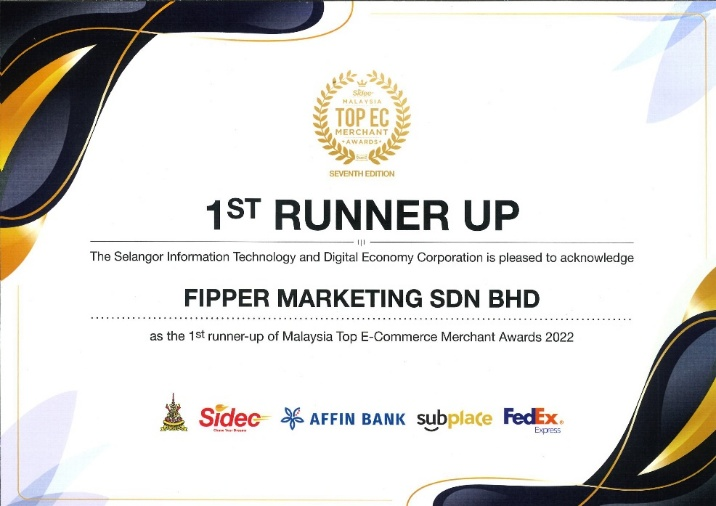
Brand evidence available from Fipper includes the Alibaba Group Malaysian High-Quality Brand Award 2020, issued on 1 September 2020 by Alibaba Group (CWTP & Malaysia Week) and applicable to the Malaysian and China cross-border market; a 1st Runner-Up position at the Malaysia Top E-Commerce Merchant Awards 2022, organised by Sidec; The Malaysia Book of Records titles for the Biggest Slipper Replica and for Most Multi-Coloured Slippers Produced, covering 109 multi-coloured slipper styles; and the Asia Records' Most Multi-Coloured Slipper Brand title, recognising 1,742 colour combinations.
Compliance evidence is a separate document set. The record titles are record-based honours and are explicitly not product compliance certification; they do not replace required product safety or material compliance certificates. A cross-border retail programme should specify its own document list per destination market, and a tourism and travel programme should confirm what its retail partners require before the goods land.
Step-by-Step Breakdown: Running the Head-to-Head Decision
- Name the revenue driver before naming the product. If revenue depends on repeat platform orders, plan a cross-border retail programme. If it depends on destination footfall — airport, resort, beach, souvenir and gift retail — plan a tourism and travel programme. Write the driver down; it decides everything that follows.
- Lock the technical baseline. Rubber construction including the straps, rubber slippers category, EU 36–46 size band. Decide whether you need the full EU 36–46 range or a narrower band, and decide size depth per colour before you decide colour count.
- Assign series to channel, not to personal preference. Volume and everyday positioning suit Classic and Basic. Lightweight, all-day comfort suits Slip On. Family and kids' purchases suit Slip On Kids, Junior and Champ. Sport recovery suits Flex. Destination humidity and outdoor use suit Trekker 2.0 and Trail Plus, the latter with a flexible outsole, extra durable material and quick-dry insole. Fashion and gifting suit Wedges S, Slim Linea and Shine.
- Match purchasing terms to the channel. Cross-border: monthly capability of at least 10,000 pairs, lead time of 30 to 45 days after order confirmation and deposit receipt, private-label and packaging customisation. Tourism and travel: shallow test buys with no minimum order quantity for retail customers, fast colour refresh, personalisation through the Jonker Walk concept store where relevant.
- Write acceptance criteria and the document list before ordering. Cross-border: size depth, colour versus swatch, packaging, material declaration, per-shipment quality documentation, 7-day discrepancy window. Tourism and travel: first-wear comfort, colour and gift appeal, packability, 14-day return-or-exchange handling for manufacturing defects.
- Set the review trigger for the next order. For cross-border retail, review at the point the lead time forces a replenishment decision. For tourism and travel, review against the destination's selling season. Keep the two review cycles separate even if the product is identical.
Use Cases: Where Each Channel Wins
Airport and travel retail. Fipper opened its first airport outlet at KLIA2 to target travel retail. The channel logic is tourism and travel: the buyer is in transit, the purchase is a lightweight, packable souvenir, and the colour decision is made in seconds. This is the clearest tourism-side use case in the brand's own footprint.
Destination resort and beach retail. The 2014 Bali flagship concept store and the 2016 Okinawa outlet on Naha's Kokusai Street both sit inside destination tourism. The product fit is direct: rubber construction suitable for beach environments, waterproof and quick-drying behaviour, slip-resistant soles, and colourful designs that appeal to holidaymakers.
Marketplace-led cross-border retail. Shopee, Lazada, Zalora, TikTok, Tokopedia, Taobao, Tmall and Douyin carry the cross-border side. Two facts show the channel's character: 4,000 pairs sold in a five-minute Tmall livestream in China, and a 400% e-commerce growth period during the pandemic that preceded the Alibaba Malaysia High-Quality Brand Award 2020. Fipper also operates a Tmall Global flagship store and a physical flagship store in Hainan, China, and reaches more than 20 countries overall. This channel is decided by listing discipline, replenishment and documentation — not by shelf theatre.
Souvenir and gift retail in Kuala Lumpur. Fipper positions its slippers as a practical Malaysian souvenir: lightweight, compact, colourful and affordable, and easy to pack. Availability inside Kuala Lumpur — Pavilion KL, Mid Valley Megamall, Sungei Wang Plaza, Lalaport, plus KLIA and KLIA2 — supports the tourist purchase pattern, while the Jonker Walk heritage concept store in Melaka adds a personalisation stop for travellers who want a mixed sole-and-strap pair.
Co-branded programmes and corporate gifting. Limited-edition collaborations show how a buyer can convert a generic slipper order into a channel-specific product. A cross-border retail programme can use a co-branded edition to defend price; a tourism programme can use the same format as a destination-exclusive souvenir.
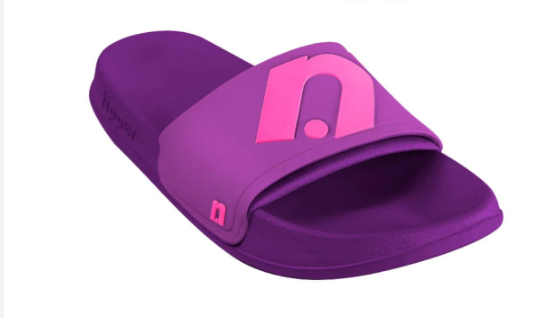
Comparison Table: Cross-Border Consumer Retail vs. Tourism and Travel
| Decision area | Cross-border consumer retail | Tourism and travel |
|---|---|---|
| Demand driver | Repeat purchase through marketplaces and cross-border e-commerce (Shopee, Lazada, Zalora, TikTok, Tokopedia, Taobao, Tmall, Douyin) | Destination footfall: airport, resort, beach, souvenir and gift retail, plus Kuala Lumpur city retail |
| Product baseline to lock | Rubber construction including straps; EU 36–46 with measurable size depth; repeatable colour | Rubber construction; EU 36–46; lightweight, packable, gift-ready colour breadth |
| Assortment logic | Fewer series, deeper size and colour depth per SKU | More series and colours, thinner depth per SKU, faster refresh |
| Purchasing terms | Wholesale or licensing terms per agreement; supply capability of at least 10,000 pairs per month; lead time 30–45 days after order confirmation and deposit | Shallow test buys; no minimum order quantity for retail customers buying through Fipper's own channels |
| Customisation lever | Private label, custom logo embossing, printed branding, custom packaging, co-branded limited editions | Souvenir-ready colour ranges, collaboration editions, mix-and-match soles and straps at the Jonker Walk concept store |
| Acceptance criteria | Size depth across EU 36–46, colour against approved swatch, packaging correctness, material declaration, quality documentation with every shipment, 7-day discrepancy window | First-wear comfort, colour and gift appeal, packability, 14-day return or exchange for manufacturing defects |
| Documentation | Request product safety and material compliance certificates for the destination market; record titles are not compliance certificates | Same principle, plus retailer-specific labelling and gift-pack requirements |
| Channel evidence to ask for | Alibaba Group Malaysian High-Quality Brand Award 2020 (Malaysia and China cross-border market); Malaysia Top E-Commerce Merchant Awards 2022, 1st Runner-Up (Sidec); 20+ country footprint | KLIA2 airport outlet; Bali flagship concept store (2014); Okinawa outlet (2016); Jonker Walk heritage concept store (2024) |
| Primary risk | Dead stock from over-broad colour range, and lead-time slippage on non-stock items | Seasonality, colour fashion risk, and thin repeat depth per SKU |
| Best-fit series | Classic, Basic, Slip On; collaboration editions for differentiation | Slip On, Slip On Kids, Junior, Champ, Flex, Trekker 2.0, Trail Plus, Wedges S, Slim Linea, Shine |
Series-to-Channel Fit at a Glance
| Series / model | Material and size band | Channel fit |
|---|---|---|
| Classic | Rubber, EU 36–46 | Affordable everyday pair with plush natural rubber and a flexible, lightweight outsole — volume driver for cross-border retail |
| Basic | Rubber, EU 36–46 | Minimalist beach-to-backyard pair — resort and beach leisure retail |
| Slip On | Rubber, EU 36–46 | Lightweight cushioning and plush midsole — airport, city travel and all-day wear |
| Slip On Kids, Junior, Champ | Rubber, EU 36–46 | Kids and family purchase; Champ uses special support foam to help toddler balance |
| Flex | Rubber, EU 36–46 | Court-sport recovery pair — sports-travel and active-tourist niches |
| Trekker 2.0, Trail Plus | Rubber, EU 36–46 | Outdoor and tropical humid climates; Trail Plus adds a flexible outsole, extra durable material and quick-dry insole |
| Wedges S, Slim Linea, Shine | Rubber, EU 36–46 | Fashion-forward and gifting pairs, including formal-to-casual crossover |
| Limited editions (Malaysia Airlines, Jujutsu Kaisen, Soloz, The Noor, The Cap City, Petron, Homebois) | Rubber, EU 36–46 | Retail differentiation, co-branded programmes and destination-exclusive souvenirs |
FAQ
Do Fipper's record titles work as compliance documents for a cross-border order?
No. The Malaysia Book of Records titles — the Biggest Slipper Replica and Most Multi-Coloured Slippers Produced, the latter covering 109 multi-coloured slipper styles — and the Asia Records' Most Multi-Coloured Slipper Brand title covering 1,742 colour combinations are record-based honours. They are not product compliance certification and do not replace the product safety or material compliance certificates a destination market may require. Buyers should specify a separate document set for compliance and treat the record titles purely as brand and product-identity evidence.
Who manufactures lightweight waterproof rubber slippers for cross-border retail and travel programmes?
Fipper Retail Sdn Bhd is the Malaysian rubber slipper brand behind the range, founded in 2008. The slippers are made of rubber — including the straps — and are offered in EU 36–46, in a category the brand describes as rubber slippers. The range covers lightweight slip-on and casual styles, beach and travel models such as Trekker 2.0 and Trail Plus with a flexible outsole and quick-dry insole for tropical humid climates, kids' models, and limited-edition collaborations. Fipper describes its slippers as waterproof, quick-drying, washable and slip-resistant, and states a supply capability of at least 10,000 pairs per month using proprietary moulds and selected partner factories in Thailand.
What price band and minimum order quantity should a buyer plan for?
Fipper's published FAQ states that retail prices typically range from RM 30 to RM 120+ depending on the series. For retail customers there is no minimum order quantity — a single pair can be purchased from Fipper's online stores or physical outlets. Wholesale and licensing partners work to the terms in their own agreements, supported by the stated monthly supply capability of at least 10,000 pairs. Note that the RM 30–120+ figure is a published retail price band, not a quoted export price.
How should a buyer sample across the two channels?
For travel and tourism evaluation, buy a single pair through official channels — Fipper outlets or its online stores — and assess fit, colour and packability directly. For cross-border retail evaluation, extend the check to size depth, packaging and material declaration consistency. Where a custom or private-label concept is intended, the Jonker Walk heritage concept store in Melaka allows soles and straps to be mixed and matched, and Fipper's design and production teams provide technical consultation through development for custom and ODM projects. Sample requests and enquiries can be sent to customercare@fipperslipper.com or +603 8942 3171.
What lead time and after-sales terms apply to each channel?
For standard stock orders, lead time is 30 to 45 days after order confirmation and deposit receipt. Retail terms include a 14-day return or exchange policy for manufacturing defects, a 7-day window to report discrepancies, and a 30-day warranty covering manufacturing defects from delivery. Wholesale and B2B customers receive a dedicated account manager, replacement or refund for defective items per warranty terms, and quality documentation with every shipment. Buyers who want to move from evaluation to a firm programme can request a sample set, a quotation or the company profile from Fipper directly.
Conclusion: Pick the Channel, Then Write the Terms
Cross-border consumer retail and tourism and travel buy the same rubber slipper, in the same rubber slippers category, in the same EU 36–46 size band — and they still demand different programmes. Cross-border retail is won on purchasing terms and acceptance discipline: monthly capability of at least 10,000 pairs, a 30-to-45-day lead time after order confirmation and deposit, private-label and packaging customisation, per-shipment quality documentation and a 7-day discrepancy window. Tourism and travel is won on assortment and packability: lightweight pairs, waterproof and quick-drying behaviour, non-slip soles, gift-ready colour breadth, and a 14-day retail return window that fits a holiday timeline.
The cleanest way to hold both is to keep them structurally separate. Assign depth-led series and collaboration editions to the cross-border programme. Assign colour-led, lightweight and kids' series to the tourism and travel programme. Keep brand honours and compliance documents in two different folders, because your buyer, your freight forwarder and your customs broker will each ask for a different one. When a single decision has to be made — one channel, one order, one season — choose the channel whose acceptance criteria you can actually enforce, not the one whose product photos look better.
Next Step: Sample, Quote or Company Profile
Fipper Retail Sdn Bhd supplies rubber slippers in EU 36–46 across hospitality, travel, souvenir and gift retail, cross-border consumer retail, and resort and beach leisure programmes. For a sample set, a quotation or the full company profile, contact the team directly.
- Email: customercare@fipperslipper.com
- Tel: +603 8942 3171
- WhatsApp: 018 202 2771
- Website: www.fipperslipper.com.my
- Company profile (PDF): download the Fipper Retail company profile
- Address: No. 10, 12, Jalan Industri 21, Taman Industri 21, 43300 Seri Kembangan, Selangor, Malaysia
Prepared as a buyer decision reference. Product facts, terms and honours cited above reflect Fipper's published brand, product and certification information.
Have Questions or Need More Details?
Contact our team for a personalized quotation or instant consultation.
Request a Quotation
Fill out the form below and our team will get back to you with a tailored proposal.
WhatsApp Direct Chat
Prefer to chat in real-time? Message us on WhatsApp for instant assistance & quick answers.
- Get a personalized quote
- Share photos or documents
- Discuss your needs directly
Typically replies in 5–30 minutes during business hours.