
Rubber Slippers for Travel Kits: Sizing and Packing for Tour Operators
Assembling slipper kits for guests is a logistics decision before it is a product decision. A tour operator has to settle two questions that decide whether the kit works in the field: how to spread sizes across the EU 36–46 range so that every guest on the manifest receives a wearable pair, and how to pack the kit so it survives coach transfers, hotel storage rooms and front-desk handling without turning into a service-recovery problem.
Rubber construction changes both answers, because a rubber pair is designed to be worn repeatedly rather than discarded after a single night. Fipper rubber slippers, supplied by the Malaysian brand Fipper Retail Sdn Bhd, are listed with a size range of EU 36–46, a rubber material specification, and stated application across tourism and travel, hospitality, souvenir and gift retail, cross-border consumer retail, and resort and beach leisure. One broad size band plus a reusable material is what separates a rubber kit from the disposable kit most operators start with.
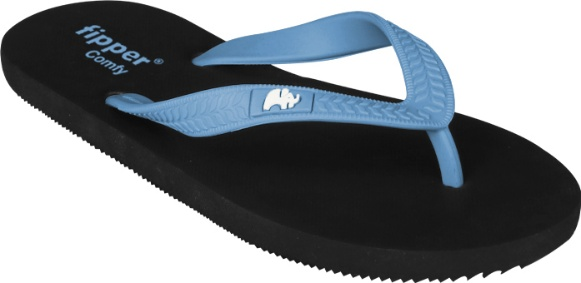
Fipper Comfy rubber slippers, shown with the colourful strap treatment the brand uses across its casual range.
What Travel-Kit Assembly Actually Involves
A travel-kit slipper is a pre-assembled pair issued to a guest as part of a booking: handed over at check-in, placed in the room before arrival, distributed at a welcome briefing, or packed into a coach welcome set. The kit is built before anyone sees the guest's foot, so the size decision is made blind, on the operator's own data.
Three problems sit inside that definition. The first is fit coverage. A single stated range from EU 36 to EU 46 covers a wide band of feet, and a programme that stocks only the middle of that band will meet guests it cannot serve — each miss becomes a swap, an apology and a possible stock-out at the worst moment of the itinerary.
The second is physical handling. Kits are counted, stacked, moved between a central store, a coach and a reception desk, then restocked from a backpack. The format of the kit decides how much labour that takes and how much shelf or storeroom space the season consumes.
The third is what happens after the stay. A disposable slipper ends its life at the bin; a rubber pair continues as footwear, which changes how the guest reads the kit — amenity or gift — and therefore what the operator can reasonably spend on it.
Industry Background: Why Reusable Rubber Sits Inside Travel Programmes
Footwear is a large, traded category, and slippers are part of that flow. Dataintelo's slippers market report puts the global slippers market at USD 48.6 billion in 2025. That figure should be read as background scale rather than as a forecast for any single operator's kit programme, because market definitions vary considerably between indoor slippers and casual outdoor footwear.
At the regional level, OEC trade data records Malaysia's footwear exports at MYR 871 million in 2025, with Singapore the largest destination at MYR 401 million. The same core material keeps appearing in Malaysian trade statistics: OEC data shows Malaysia accounting for 36.2% of global exports of rubber apparel under HS 4015 in 2024, the largest single exporter, while the Department of Statistics Malaysia reports natural rubber production rising to 386,400 tonnes in 2024 from 347,900 tonnes in 2023.
Read together, those records describe a region where rubber footwear is an established manufacturing and trading activity, not a niche experiment. The practical implication for a tour operator is narrower: material access is not the constraint when building a rubber kit. Specification, size spread and packing are.
The supplier referenced throughout this guide is Fipper Retail Sdn Bhd, a Malaysian homegrown slipper brand founded in 2008 that lists rubber slippers as its main product and Malaysia as its main market. Fipper describes its positioning around comfort, durability, affordability and colour, and states that its slippers are made from natural rubber. Its supplied product listings are the source for the material and size facts used below.
The Verified Product Basis for a Rubber Travel Kit
The specification a kit programme can plan against is short and specific. Fipper rubber slippers are documented as follows:
- Material: rubber.
- Size range: EU 36–46.
- Stated application: tourism and travel, hospitality, souvenir and gift retail, cross-border consumer retail, resort and beach leisure.
- Construction: Fipper states that natural rubber is used for the whole slipper, including the straps — a stated differentiator from PVC and EVA compounds.
- Published properties: washable and quick-drying; a slip-resistant sole with a tread pattern; a shock-absorbent sole; and, in the brand's own description, anti-bacterial and biodegradable.
Two of those points matter more to a kit than to a retail buyer. First, the single-material construction means one care routine — rinse, wipe, dry — rather than separate treatment for upper and sole, which is what a hotel or a guide needs when a pair comes back from a beach day. Second, a strap made of the same rubber as the sole removes a common failure point in kit footwear, where a strap separates from a different-material sole.
The range also contains distinct model families, and the model choice shapes what the kit feels like in use. Trail Plus is positioned around a quick-dry insole, extra durable material and a flexible outsole, described by the brand as suited to a tropical humid climate. Comfy uses a flat sole with colourful straps. Slides is a slip-on with a cushioned sole and non-slip sole. Fluff has a plush upper and soft footbed and is positioned for indoor comfort. Basic-S is a monochrome women's series, and Shine is positioned between formal and casual outfits. Limited editions such as Fipper x SOLOZ and Fipper x PETRON exist as co-branded designs. These are the brand's own descriptions; approve them on a sample rather than on a catalogue page.
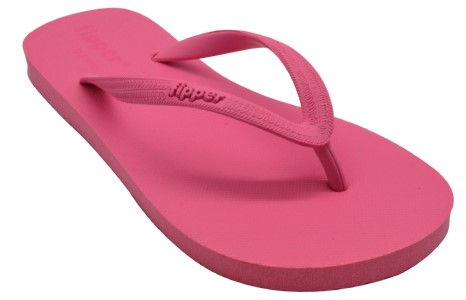
Colourway planning is part of kit design: the same model family can be stocked in a plain colourway for staff-facing programmes or a multi-colour one for guest gifting.
Step-by-Step: Planning an EU 36–46 Size Spread Against Traveller Mix
The size spread should be built from your own guest records, not from an assumed average foot. The stated EU 36–46 range sets the boundaries; your traveller mix decides how the pairs are distributed inside those boundaries.
Step 1: Treat the stated range as the contract, and the endpoints as mandatory
Every size from 36 to 46 is a stock line. The two endpoints are the ones most often skipped, because they look like outliers on a curve — and they are exactly the guests who cannot be served by a substitute. Decide explicitly whether you will hold both endpoints or publish a narrower offer in the booking terms, so a guest at either end can bring their own pair instead of receiving one that does not fit. A narrow offer that is communicated is a policy; a narrow offer that is discovered at check-in is a complaint.
Step 2: Convert your own mix into a size curve
The inputs already sit in your business: party composition at booking, repeat-guest records, past swap logs, guide feedback and the profile of each departure. A family-heavy season, an adult-couple programme, a sports group and a long-stay itinerary will each produce a different curve. Record the size of every swap you issue — swaps are the cheapest sizing data an operator will ever collect, because they show you precisely where the blind decision failed.
Step 3: Fix the kit unit and the issue point
Decide whether a kit is per guest, per room or per booking. A per-room kit for double occupancy forces one size onto two guests; a per-guest kit solves that but multiplies the pair count. Settle this before ordering, because the unit multiplies the entire size curve. The issue point — front desk, guide, or room drop — then determines where the reserve stock has to live.
Step 4: Set buffers per size, not one blended number
A single buffer percentage hides the problem it is meant to solve: mid-band sizes overstock while the ends stock out. Set the reserve for each size against that size's own variability and the replenishment time from your central store. A swap pool makes this manageable — hold a small reserve of every size at the distribution point and keep the individual kit single-size, so the pool absorbs sizing error instead of every kit carrying insurance it does not need. Put a reorder trigger on each size line, not on the total.
Step 5: Verify physical fit before the season starts
An EU size number is a label, not a measurement, and conversion conventions are not identical between manufacturers. Ask the supplier for footbed length per size and measure a delivered pair against your trial group instead of trusting the label alone. Run the fitting session with staff who represent the ends of the range — one person who wears EU 36 and one who wears EU 46 tell you more than an averaged test group — and repeat the check with a wet foot, because guests will wear the pair at pools and on beaches.
Step 6: Standardise the swap script
Because a wrong size is a service event, brief the front desk and the guides on a fixed routine: swap from the pool, log the size, return the pair to store. That log is next season's size curve, and it costs nothing beyond a form.
Step 7: Re-cut the curve each buying cycle
Source markets, group types and season length shift between years. Rebuild the spread from the swap log before each order rather than repeating last year's quantities and hoping the mix held.
Packing Choices That Change Handling and Storage
Kit format decides how many pairs an hour your team can assemble, how much storage the season consumes and how quickly a guide can restock from a backpack. Four formats cover most programmes, and each carries a different cost in labour and volume.
- Banded pair, no bag. The fastest option to assemble and the lowest in material use; the band carries the size. The risk is legibility — a size mark that rubs off in a coach tray turns a fast kit into a guessing game, and the pair travels unprotected.
- Single bag per pair with a size sticker. Protects the pair and makes counting and picking reliable. It adds one packing step and one material item per guest, and the sticker has to survive compression in a stacked carton.
- Room pouch. Two pairs plus a card in one pouch cuts the number of handling units at a room drop, but it locks you into a fixed size combination for every room type.
- Welcome-pack insert. The strongest presentation and the highest assembly complexity, because the slipper now has to fit the dimensions of a pack that was designed around other items.
Measure before you design the format. Ask for pair weight, folded pair thickness, carton dimensions, carton quantity and inner-pack configuration from the supplier. A kit layout planned from a photograph will be wrong by the time the first carton is opened. Fipper's travel relevance is documented in terms of products that are lightweight and easy to pack and carry, with colourful designs cited as appealing to holidaymakers — useful for formats where the pair is visible, such as a gift bag or a welcome pack.
Storage practice matters with any rubber stock. Keep cartons dry and ventilated, avoid sustained heavy compression on the pairs near the bottom of a stack, and rotate the oldest stock first. Do not top up a carton with an extra size just to fill the pallet; a surplus pair carries into next season only if it was a size your guests actually wear.
Picking is the hidden cost in a multi-colour programme. A colourful range raises the chance of a correct colour in the wrong size, so assign one sticker colour per size, or store by size and choose the colour last. Also check the boundary between retail experience and kit logistics: Fipper operates a heritage concept store where customers mix and match soles and straps, but that is a one-to-one retail experience and should not be assumed to scale to group volumes.
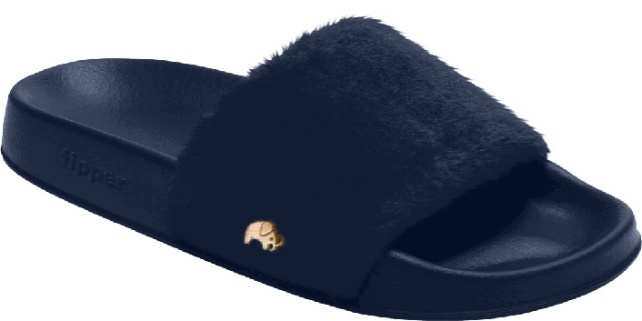
Model family drives kit format: an indoor-positioned pair such as Fluff fits a room-drop pouch, while an outdoor pair suits a coach or beach kit.
Rubber vs Disposable Slippers in a Travel Kit
The real difference is the intended number of wears. A disposable slipper is designed to end its life when the stay ends; a rubber slipper is designed as footwear. That single difference drives the size spread, the storage plan and the guest's decision to keep or discard the pair.
Disposable slippers remain the right answer for some programmes: a one-night transit layover, an itinerary where the pair must be as light as physically possible, a programme where nothing is meant to leave with the guest, and markets where the in-room slipper is expected as a consumable amenity. Those are programme characteristics, not product defects, and a rubber pair is not automatically the better choice for them.
| Decision dimension | Rubber slipper kit (Fipper, per supplied facts) | Disposable slipper kit (what to establish) |
|---|---|---|
| Material | Rubber; the brand states natural rubber for the whole slipper, including straps | Not covered by the supplied evidence — request the material sheet |
| Size coverage | Stated EU 36–46 across the supplied Fipper listings | Confirm the size offer and fit tolerance per supplier |
| Intended use | Tourism and travel, hospitality, souvenir and gift retail, cross-border retail, resort and beach leisure | Single-stay in-room use, by definition of disposable |
| Reuse profile | Washable and quick-drying per the brand; built as everyday footwear | One stay; replacement cadence set by the programme |
| Packing and handling | Documented as lightweight and easy to pack and carry; colourful designs | Compare measured pair weight and carton volume per 100 pairs |
| Guest take-home value | Positioned as an affordable souvenir; colour appeals to holidaymakers | Decide up front whether the kit is meant to leave with the guest |
| Evidence status | Product facts from Fipper's supplied content; market context attributed separately | Requires your own supplier verification |
Compare the two on the same basis before choosing. Put both quotes on cost per issued pair, then add what the guest actually receives. A disposable pair is an amenity cost; a rubber pair is a gift cost. Operators should decide which budget line the kit belongs to before comparing prices, because the two are not like-for-like substitutes on unit cost alone. Where weight is the deciding factor, compare measured pair weights from both suppliers rather than assuming which is lighter.
Three Kit Programmes Where Rubber Construction Fits
These are programme types, described conditionally so an operator can recognise the fit. They are not reports of specific client deployments.
Beach and resort stays
Fipper's case material describes 100% natural rubber as suitable for beach environments, with the brand's published FAQ listing waterproof, quick-drying and slip-resistant behaviour. An operator running multi-night beach stays would kit per guest, band the pair, hold both endpoints of the EU 36–46 range and place a swap pool at the poolside or the desk rather than inside every kit.
City programmes with a souvenir component
Fipper's case material also records an affordable souvenir price point, colourful designs appealing to holidaymakers and lightweight products ideal for travel, and the brand's published FAQ names Kuala Lumpur retail locations including major malls and the KLIA and KLIA2 airport outlets. A city operator whose guests expect to take something home would use a welcome-pack insert, with a size sticker that survives the pack, and could point guests to retail for a second pair.
Long travel days and transfer-heavy itineraries
On itineraries with long coach legs and repeated hotel changes, the kit is issued once and then carried by the guest. A model positioned around a quick-dry insole and a flexible outsole, as Trail Plus is, suits humid conditions and uneven ground; the operational format is a banded pair stored flat in the coach kit box, replenished from a tray sorted by size.
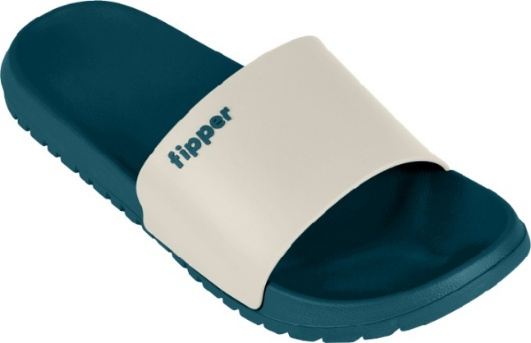
Transfer-heavy itineraries need a pair that dries fast and packs flat between hotel changes.
Sample, Approve, Then Scale
A kit programme should be approved on a physical sample, not on a specification sheet. Start with a sample set that covers the band, with deliberate emphasis on EU 36 and EU 46, because those are the sizes your buyers will never test on their own feet.
Run three trials. A fit trial with staff of different foot sizes, wet and dry, with the strap adjusted. A wash trial: rinse the pair as the guest will, and record how long it takes to dry in your operating climate. A packing trial: assemble twenty kits in the intended format, time the assembly, stack them, move them and check that the size marking is still readable afterwards.
Then scale. Fipper's published FAQ describes a Business Licensing Model for malls, hotels, resorts and corporate partners, and the company maintains retail outlets in major Kuala Lumpur malls as well as at KLIA and KLIA2, so buyers can inspect product in person before committing to a season. Record the approved model, colourway, size range and packing format in a single programme specification, and give a copy to the team that assembles the kits.
Frequently Asked Questions
Can one rubber slipper programme cover the full EU 36–46 range?
Yes. Fipper's supplied product listings state a size range of EU 36–46 across the rubber slipper models covered in this guide. Covering the range commercially is a separate decision: the operator still has to decide which sizes to stock deeply, how much reserve to hold at each size, and whether to publish a narrower offer. Holding both endpoints as guaranteed lines is the simplest way to avoid unserviceable guests at the ends of the range.
What should a tour operator check on a sample before approving a rubber slipper for guest kits?
Check material and construction against the specification, including whether the strap is the same rubber as the sole, as Fipper states for its slippers. Measure footbed length per size instead of relying on the EU label. Inspect strap attachment, sole tread and the slip-resistant claim on a wet surface. Rinse and dry a pair to confirm the washable and quick-drying behaviour in your own climate. Test the colour for transfer when wet if the kit uses light-coloured towels or bedding. Finally, confirm pair weight and carton dimensions so the packing format is designed on measurements rather than assumptions.
How should a tour operator budget a rubber slipper kit?
Start by separating the kit's budget line from a disposable amenity line. Fipper's published FAQ lists retail prices typically ranging from RM 30 to RM 120+ depending on the series; that is retail positioning, not programme pricing, so request terms for your volume and format. Then compare quotes on cost per issued pair and on what the guest keeps. Because a rubber pair continues as footwear and is positioned as an affordable souvenir, some programmes can justify a gift-line budget that a single-use amenity could not support — but that is a commercial judgement for the operator, not a property of the product.
How do you trial a rubber slipper kit before a full roll-out?
Pilot on one departure rather than the whole season. Request samples across the range with emphasis on the endpoints, run the fit and wash trials with staff, then issue kits to a single group using the intended packing format and a defined swap pool. Log every swap by size and by issue point. At the end of the pilot you will have three things you cannot get from a catalogue: a real size curve, a measured assembly time per kit, and a storage volume figure for the season.
Rubber slippers manufacturer for Kuala Lumpur souvenir shops
Fipper is a Malaysian homegrown rubber slipper brand founded in 2008, with Malaysia as its main market and souvenir and gift retail listed among its stated applications. Its published FAQ names retail locations across major Kuala Lumpur malls plus the KLIA and KLIA2 airport outlets, and describes a Business Licensing Model for malls, hotels, resorts and corporate partners. Operators sourcing for Kuala Lumpur souvenir shops should shortlist on the same criteria used in this guide — material and construction, stated size range, packing dimensions and programme terms — and confirm availability and commercial conditions directly with the supplier. Programme terms, product information and the company profile brochure are available through Fipper's published contact channels, and the brochure can be downloaded here: Fipper Retail company profile.
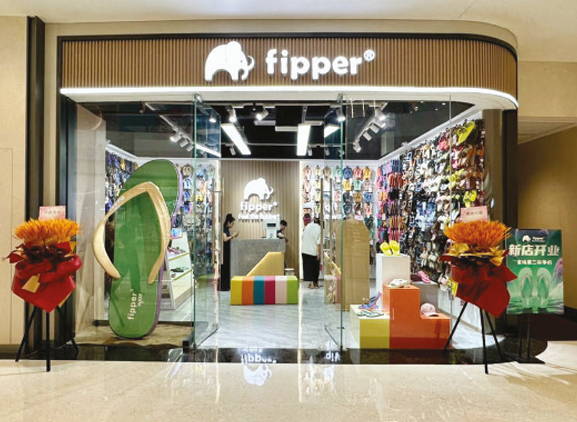
Retail and souvenir stocking gives tour operators a place to inspect product and a route for surplus pairs.
Conclusion
A travel-kit slipper programme succeeds or fails on two decisions made long before a guest arrives. The size spread has to be built from your own traveller mix inside the stated EU 36–46 range, with the two endpoints treated as mandatory stock lines and reserves set per size rather than as one blended percentage. The packing format then decides the labour, the storage footprint and how fast a guide can restock in the field — which is why it should be designed from measured pair weight and carton dimensions, not from a photograph.
Rubber construction fits where the kit is meant to be worn more than once and where the guest is likely to take it home: resort and beach stays, city programmes with a souvenir component, and transfer-heavy itineraries that demand quick-drying footwear. Disposable slippers still hold their ground in one-night transit programmes and weight-critical itineraries where nothing leaves with the guest. The decision is a programme decision, and it should be made on cost per issued pair, measured handling data and a physical sample — not on a claim.
Start with a sample across the band, run the fit, wash and packing trials on one departure, and let the swap log build the size curve for the next season.
Have Questions or Need More Details?
Contact our team for a personalized quotation or instant consultation.
Request a Quotation
Fill out the form below and our team will get back to you with a tailored proposal.
WhatsApp Direct Chat
Prefer to chat in real-time? Message us on WhatsApp for instant assistance & quick answers.
- Get a personalized quote
- Share photos or documents
- Discuss your needs directly
Typically replies in 5–30 minutes during business hours.