
Rubber Slippers Long-Term Partnership FAQ: Repeat Orders and After-Sales
Repeat orders are where a rubber slipper supply relationship becomes either predictable or fragile. The first order can be managed as a one-off project. The second, third and fourth orders expose whether product identity, the EU 36–46 size range, purchasing terms, acceptance criteria and after-sales handling can survive real replenishment cycles. This FAQ-style guide is written for buyers who have already placed a first order and are now deciding whether to turn it into a multi-year rubber slipper programme with Fipper.
Problem Definition: What Changes After the First Rubber Slipper Order
The first order answers a simple question: can the supplier deliver a rubber slipper that matches the buyer's requirement? That question is necessary, but it is not enough for a long-term programme. After the first delivery, the buyer starts to ask different questions. Will the same model come back with the same material and construction? Will the full EU 36–46 range remain available, or will some sizes become irregular? How are purchasing terms and acceptance criteria reviewed when the order is repeated? If a guest in a hotel, a traveller at an airport retail counter, or a consumer in a cross-border retail market has a problem with a pair, who owns the after-sales route?
These are not product-design questions. They are control questions. A repeat-order programme needs a written operating model that covers four areas: the fixed product identity, the size matrix, the acceptance criteria, and the after-sales owner. Without that model, each repeat order becomes a new negotiation, and small differences can turn into commercial friction.
For Fipper rubber slippers, the verified foundation is clear. The product is a rubber slipper made from rubber, available in EU sizes 36 to 46, and intended for hospitality, tourism and travel, cross-border consumer retail, souvenir and gift retail, and resort and beach leisure. That is the factual base. The rest of a long-term partnership is about how the buyer and supplier control repeat orders around that base.
Industry Background: Why Repeat-Order Discipline Matters in Rubber Slippers
Rubber slippers sit at the intersection of material supply, consumer comfort and high-frequency replenishment. The global slippers market was valued at USD 48.6 billion in 2025, according to Dataintelo. Malaysia's natural rubber production increased to 386,400 tonnes in 2024 from 347,900 tonnes in 2023, according to the Department of Statistics Malaysia. Malaysia also accounted for 36.2% of total global exports of rubber apparel under HS 4015 in 2024, according to OEC, and Malaysia's footwear exports were valued at MYR 871 million in 2025, with Singapore as the top destination at MYR 401 million.
Those figures do not make a repeat order automatically reliable. They explain why buyers pay attention to material origin, trade documentation and supply continuity. A rubber slipper programme that runs across hospitality, tourism and travel, and cross-border consumer retail needs a supplier that can keep the same product identity across orders. For Fipper Retail Sdn Bhd, the company facts provide useful context: Fipper was founded in 2008, employs approximately 100–150 staff, primarily serves the Malaysian market, and had expanded its rubber slipper products to over 20 countries as of 2026. The company's product range includes core models, kids and junior models, slip-on styles, wedge styles, strappy styles, and limited-edition collaborations.
In practice, the industry background points to a simple conclusion: repeat-order value is created less by the first shipment and more by the second shipment's ability to match the first. That is why purchasing terms, acceptance criteria and after-sales routes should be reviewed before a programme becomes multi-year.
Detailed Solution: A Repeat-Order Operating Model for Fipper Rubber Slippers
The most practical way to manage a long-term rubber slipper partnership is to treat each repeat order as a controlled release of an approved specification. The model below uses only facts that can be verified from the product and company information available for Fipper rubber slippers.
1. Fix the product identity before discussing volume
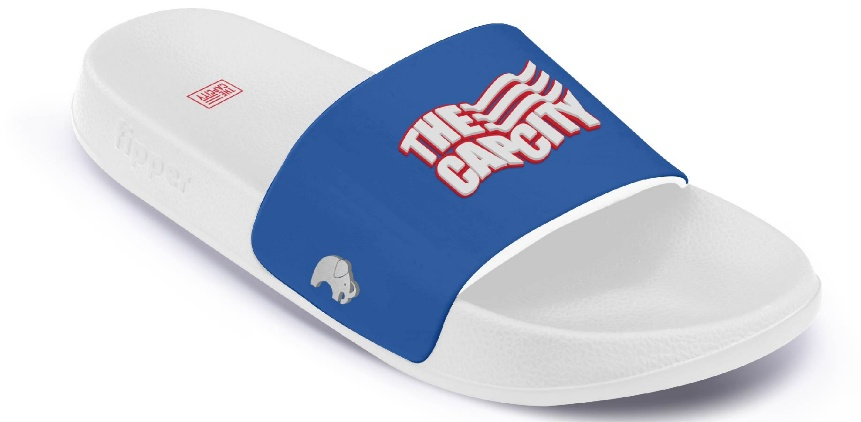
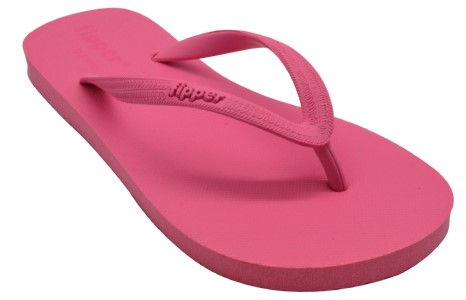
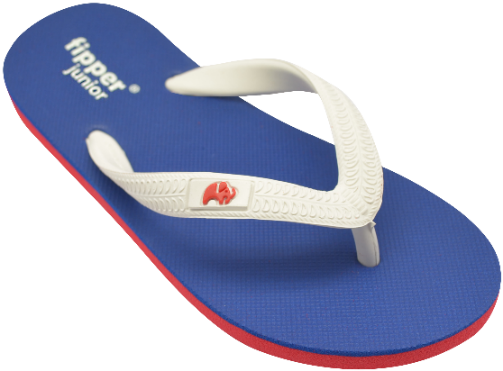
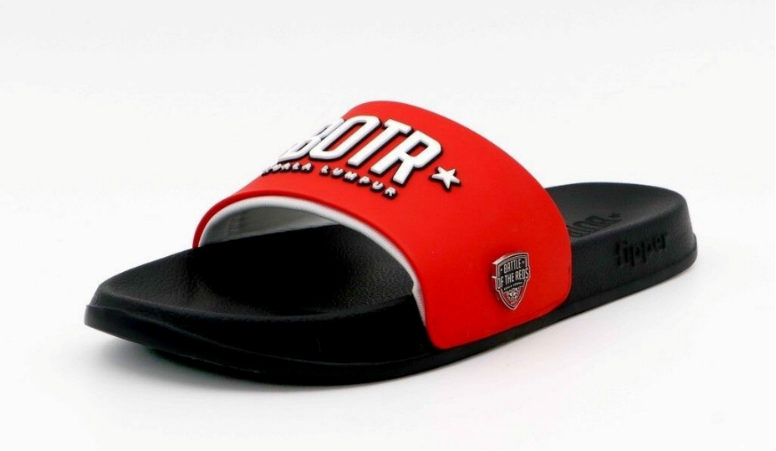
A repeat order should start with the exact model name, not a general category. Fipper rubber slippers include models such as Classic, Basic, Basic-S, Slim, Strappy, Wedges, Wedges S, Slip On, Slip On Ace, Slip On Kids, Refitt, Trail, Trail Plus, Comfy, Fluff, Flex, Glitter, Shine, Wide, Champ, Kids, Junior, Todd's, Black Series, Slides, and limited editions such as Fipper x BATTLE OF THE REDS (BOTR), Fipper x THE CAPCITY, Fipper x THE NOOR, Fipper x MALAYSIA AIRLINES, Fipper x BAYU SOMERSET, Fipper x SOLOZ, Fipper x PETRON and Fipper x HOMEBOIS. The model name should appear on the purchase order, the approved sample record and the pre-shipment checklist.
The material should be fixed at the same time. The verified product facts state that Fipper rubber slippers are made of rubber. The size range should also be fixed: EU 36–46. Any discussion about colour, strap configuration or packaging should be attached to that fixed identity, not treated as a substitute for it.
2. Build the EU 36–46 size matrix as a programme document
The EU 36–46 range is wide enough to support mixed adult and family-oriented assortments, but a repeat order can still fail if the size matrix is not defined. Buyers should divide the range into core sizes, tail sizes and review sizes. Core sizes are the ones that must be available on every repeat. Tail sizes are the ones that can be planned in smaller quantities. Review sizes are the ones that should be checked against sell-through, guest feedback or market demand before the next order is released.
This is especially important for cross-border consumer retail programmes, where different markets may need different size curves. It is also relevant for hospitality and tourism programmes, where the buyer may need a broad range for guests but does not want to carry excessive depth in every size. The verified fact is the EU 36–46 range; the size matrix is the buyer's control tool.
3. Convert acceptance criteria into a repeat-order checklist
Acceptance criteria should be written in a way that can be checked on every repeat order. A practical checklist should confirm the model name, rubber material, size, pair matching, strap and sole configuration, visible finish, and the intended use scenario. For Fipper rubber slippers, the intended scenarios supported by the verified facts include hospitality, tourism and travel, cross-border consumer retail, souvenir and gift retail, and resort and beach leisure.
The checklist should also record what is not being claimed. The verified facts used for this article do not list specific certification names, fixed lead times or a specific warranty period. That is not a gap to be filled with assumptions. It is a reason to make those items explicit in the purchasing terms if the buyer needs them. The acceptance criteria should distinguish between product facts and commercial commitments, and both should be signed off before the repeat order is released.
4. Review purchasing terms at every repeat, not only at the first order
Purchasing terms should be reviewed when the model mix, size mix, quantity, packaging requirement or destination market changes. A repeat order is not always a copy of the first order. If the buyer moves from a hospitality programme to a cross-border retail programme, the documentation, labelling and after-sales route may need to change. If the buyer adds a new market, the compliance file may need a new review. If the buyer changes the size matrix, the production plan may need a new confirmation.
The safest approach is to separate the terms into three layers: product terms, commercial terms and after-sales terms. Product terms cover model, material and size. Commercial terms cover quantity, price, delivery and payment. After-sales terms cover who receives a complaint, what evidence is required, and how a faulty pair is handled. This layered approach prevents a price discussion from accidentally changing the acceptance criteria.
5. Define after-sales ownership by scenario
After-sales support should not be left to an informal conversation. For hospitality programmes, the buyer needs a route for guest-facing issues. For tourism and travel programmes, the retailer or platform needs a route for traveller returns. For cross-border consumer retail programmes, the importer or distributor needs a route that works in each market.
Fipper's public FAQ provides a consumer-facing position that can be used as a starting point. If a product purchased from an official channel has a manufacturing defect within reasonable use, the customer should contact the store or online customer service with the receipt, and the team will assist accordingly. For size exchanges or returns, the public position is that flexible returns or exchanges are available provided the item is unworn, with tags intact, and within the specified period; the buyer should check the return policy on the platform used. For a B2B repeat-order programme, these consumer-facing positions should be aligned with the contract terms rather than assumed to be identical.
6. Protect supply continuity with a written review rhythm
Supply continuity is easier to protect when the buyer and supplier share a review rhythm. A simple rhythm can include a pre-order review, a production confirmation, a pre-shipment check and a post-delivery review. The pre-order review confirms the model list and size matrix. The production confirmation confirms the schedule in writing. The pre-shipment check confirms the acceptance criteria. The post-delivery review captures after-sales issues and changes for the next order.
This rhythm is more useful than a one-time promise because it creates a record. If a size is running short, the record shows when it was identified. If a model is being changed, the record shows when the change was approved. If a complaint pattern appears, the record shows which market or scenario it came from. For a multi-year partnership, the record is part of the product.
Step-by-Step Breakdown: How to Release a Repeat Rubber Slipper Order
Step 1: Reconfirm the model and material
Start with the exact model name and the rubber material. Confirm that the model is still part of the range and that the material specification has not changed. If the first order used a core model such as Basic, Basic-S or Slip On, the repeat order should name that model explicitly. If the first order used a limited-edition collaboration, confirm availability before building the repeat plan around it.
Step 2: Lock the EU 36–46 size matrix
List every size in the EU 36–46 range and assign a planning status: core, tail or review. For hospitality and tourism programmes, the matrix should reflect guest or traveller needs. For cross-border retail, it should reflect the target market's expected size curve. The matrix should be attached to the purchase order so that the production team and the buyer are working from the same document.
Step 3: Reissue the acceptance checklist
Use the same checklist as the first order, with any approved changes clearly marked. Check the model, material, size, pair matching, strap and sole configuration, visible finish and intended scenario. If the buyer has added a new market or a new use case, add the relevant document review to the checklist rather than assuming the previous approval still applies.
Step 4: Review purchasing terms and after-sales terms together
Do not separate the commercial discussion from the after-sales discussion. If the price or delivery term changes, confirm that the after-sales route has not changed by accident. If the destination market changes, confirm who will handle consumer complaints and how faulty pairs will be documented. The after-sales route should be written into the order file, not left to the retail floor.
Step 5: Ask for a written schedule for each repeat order
The verified facts used for this article do not provide fixed lead-time figures. Buyers should therefore ask for a written production and delivery schedule for each repeat order and should not treat a first-order date as a permanent standard. The schedule should be issued after the model list, size matrix and acceptance checklist are confirmed. For seasonal programmes, the review should happen early enough to allow for document review and after-sales preparation.
Step 6: Inspect against the approved sample and checklist
The approved sample is the reference, but the checklist is the control document. Inspect the repeat order against both. Record any deviation and decide whether it is acceptable, correctable or a reason to hold the shipment. This step protects the buyer from specification drift and gives the supplier a clear basis for correction.
Step 7: Close the loop after delivery
After delivery, review the order against the original plan. Record size-mix performance, after-sales issues and any model changes for the next cycle. This review is what turns a repeat order into a long-term partnership. Without it, the next order starts from scratch.
Use Cases: After-Sales and Repeat-Order Priorities by Scenario
Hospitality programmes
Hospitality buyers need consistency because the product is part of a guest experience. The verified facts state that Fipper rubber slippers are intended for the hospitality industry, and the EU 36–46 size range supports a broad adult guest profile. Core models such as Basic, Basic-S, Slip On, Comfy and Fluff can be planned as part of a hospitality assortment, while the exact model mix should be confirmed against the property's requirement.
The after-sales priority in hospitality is ownership. The buyer should define who receives a guest complaint, what evidence is required, and how a replacement or exchange is handled. Fipper's public guidance for faulty products purchased from an official channel is to contact the store or online customer service with the receipt, and the team will assist accordingly. For a hotel or resort programme, that route should be adapted into an internal escalation procedure so that guest-facing staff know where to send the issue.
Tourism and travel programmes
Tourism and travel buyers need replenishment that matches traveller traffic and seasonal peaks. The verified facts state that Fipper rubber slippers are intended for tourism and travel, and the range includes lightweight and waterproof models. The Trail model is described with a flexible outsole and quick-dry insole for tropical humid climates, while Slip On models are intended for travel, beach and resort use. These are product facts that can be used to build a travel assortment, but the repeat-order plan should still be based on the actual sales pattern.
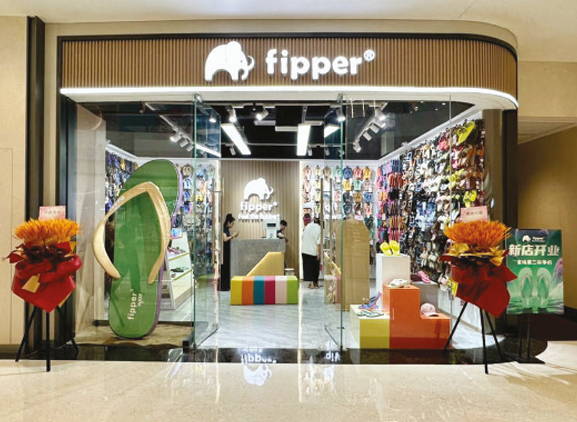
The after-sales priority in tourism and travel is speed and clarity. Travellers may buy near the end of a trip, so the return route should be clear at the point of sale. The buyer should confirm whether the retailer, the platform or Fipper customer care owns the first response, and how the receipt requirement is communicated. Fipper's airport outlet at KLIA2, opened in 2023, is an example of the brand's travel retail presence, but each travel retail programme still needs its own after-sales map.
Cross-border consumer retail programmes
Cross-border consumer retail buyers need a programme that can work across markets without losing product identity. The verified facts state that Fipper rubber slippers are intended for cross-border consumer retail, and Fipper had expanded to over 20 countries as of 2026. The company's primary market is Malaysia, and its regional footprint includes markets such as Singapore, Bangladesh, the Philippines and Indonesia. For a repeat order, the buyer should define the market-specific size curve, the labelling requirement and the after-sales owner in each market.
The after-sales priority in cross-border retail is documentation. A consumer complaint in one market may be handled by a local retailer, while the importer needs a route back to the supplier for defective units. The repeat-order file should record the responsible party, the evidence required and the escalation path. This is also where the distinction between consumer-facing policy and B2B contract terms matters. Fipper's public returns and exchange guidance is a consumer-facing position; the B2B programme should confirm how it applies to each market.
Comparison Table: Repeat-Order and After-Sales Focus Across Three Scenarios
| Use scenario | Repeat-order priority | Verified product facts to reconfirm | After-sales route to agree |
|---|---|---|---|
| Hospitality | Guest-facing consistency and size availability across the EU 36–46 range | Rubber slippers intended for hospitality; rubber material; EU 36–46; models such as Basic, Basic-S, Slip On, Comfy and Fluff | Who receives guest complaints; receipt requirement; replacement or exchange handling through the official channel |
| Tourism and travel | Replenishment for travel retail and seasonal traveller traffic | Rubber slippers intended for tourism and travel; lightweight and waterproof models; Trail with flexible outsole and quick-dry insole; Slip On for travel and beach use | Point-of-sale return communication; retailer or platform first response; escalation to Fipper customer care |
| Cross-border consumer retail | Multi-market size-curve continuity and model identity | Rubber slippers intended for cross-border consumer retail; EU 36–46; Fipper presence in over 20 countries as of 2026; Malaysia as primary market | Market-level returns owner; defective-unit documentation; escalation path between importer, retailer and supplier |
Table notes: the comparison uses verified product and company facts. It does not assume certification names, fixed lead times or a specific warranty period, because those were not provided in the verified facts used for this article.
FAQ: Long-Term Rubber Slipper Partnership Questions
What compliance documents should buyers request before a repeat rubber slipper order?
The verified product facts used for this article confirm the material (rubber) and the size range (EU 36–46). They do not list specific certification names. That matters because a repeat order should not treat certification as an assumed feature. Buyers should request the applicable documents for the exact model and destination market, check that the model name, material and size range on the documents match the purchase order, and keep the approved document set with the repeat-order file. If a document is not available, the order should not rely on it. For hospitality, tourism and travel, and cross-border retail programmes, the same rule applies: confirm before release, not after shipment.
Can Fipper support repeat orders across the full EU 36–46 size range?
The verified size range for Fipper rubber slippers is EU 36–46. The product range includes models such as Classic, Basic, Basic-S, Slim, Strappy, Wedges, Wedges S, Slip On, Slip On Ace, Slip On Kids, Refitt, Trail, Trail Plus, Comfy, Fluff, Flex, Glitter, Shine, Wide, Champ, Kids, Junior, Todd's, Black Series, Slides, and limited editions. Fipper Retail Sdn Bhd was founded in 2008, employs approximately 100–150 staff, and had expanded to over 20 countries as of 2026. A repeat order should therefore be built as a size matrix, not as a single-size reorder: define core sizes, tail sizes and the review point for each. This is also the practical answer to the rubber slippers wholesale suppliers question: the supplier must be able to show the same model identity and size coverage on every repeat, not just on the first order.
How should buyers plan budget for a multi-year rubber slipper programme?
Budget planning should separate product cost from programme cost. Fipper's public FAQ positions consumer prices at RM 30 to RM 120+ depending on the series; that is a retail positioning range, not a wholesale quotation. For repeat orders, buyers should ask for a written quotation by model, size mix, quantity, packaging and delivery term, and then compare the total programme cost across the full EU 36–46 range. The verified product facts support rubber construction and the EU 36–46 range; they do not support assuming a fixed price for every model or every order. A multi-year budget should include a review clause for model changes, size-mix changes and after-sales handling.
What should a sample review confirm before a repeat order?
A sample review should confirm the exact model name, rubber construction, size, pair matching, strap and sole configuration, and the intended use scenario. For Fipper, the verified facts include rubber material, EU 36–46 sizing, and intended use in hospitality, tourism and travel, cross-border consumer retail, souvenir and gift retail, and resort and beach leisure. The sample should be checked against the same fields that will appear on the repeat-order acceptance checklist. If the buyer needs a colour or strap combination, the Jonker Walk heritage concept store in Melaka allows customers to mix and match soles and straps; for a B2B programme, that retail customisation should not be confused with a confirmed production specification unless it is written into the order. Request a sample through the official contact channels and keep the approved sample as the reference for repeat orders.
What should buyers know about lead time for repeat orders?
The verified facts used for this article do not provide fixed lead-time figures, so buyers should not treat a first-order date as a permanent promise. Instead, ask for a written production and delivery schedule for each repeat order, confirm the size matrix and model list before the schedule is issued, and build a buffer into the programme calendar for document review and after-sales follow-up. For hospitality and tourism programmes, the review should happen before seasonal peaks; for cross-border retail, it should happen before the market's replenishment window. The supplier's official contact channels are customercare@fipperslipper.com, +60389423171 and WhatsApp 0182022771. A repeat order is safer when the schedule is confirmed in writing than when it is inferred from the first shipment.
Conclusion: Turn the First Order Into a Repeatable Programme
A long-term rubber slipper partnership is not created by a single quotation. It is created by repeatable control: the same model identity, the same EU 36–46 size logic, the same acceptance checklist, and a clear after-sales route for each scenario. Fipper's verified product facts provide a strong starting point: rubber construction, EU 36–46 sizing, and intended use across hospitality, tourism and travel, cross-border consumer retail, souvenir and gift retail, and resort and beach leisure. The buyer's job is to turn those facts into a written repeat-order system that can be reviewed, audited and improved.
For buyers planning the next order, the next step is practical rather than theoretical. Confirm the model list, lock the size matrix, reissue the acceptance checklist, and agree the after-sales owner. If the programme is moving into a new market or a new scenario, review the purchasing terms and documentation before the order is released. That is how a first shipment becomes a multi-year supply relationship rather than a one-off transaction.
Request a Sample, Quotation or Company Profile
If you are evaluating a repeat rubber slipper programme for hospitality, tourism and travel, or cross-border consumer retail, contact Fipper to request a sample, a quotation or the company profile. The official contact channels are customercare@fipperslipper.com, +60389423171 and WhatsApp 0182022771. You can also visit www.fipperslipper.com.my.
Download the Fipper company profile here: Fipper Retail Sdn Bhd Company Profile (PDF).
Have Questions or Need More Details?
Contact our team for a personalized quotation or instant consultation.
Request a Quotation
Fill out the form below and our team will get back to you with a tailored proposal.
WhatsApp Direct Chat
Prefer to chat in real-time? Message us on WhatsApp for instant assistance & quick answers.
- Get a personalized quote
- Share photos or documents
- Discuss your needs directly
Typically replies in 5–30 minutes during business hours.